


The year 2026 represents a “perfect storm” for payroll departments and HR strategists. It is not just another tax year; it is a convergence of a rare calendar anomaly and a massive legislative expiration date.
If your organization processes payroll on a bi-weekly basis (every two weeks), you are likely facing a 27-pay-period year—a phenomenon that occurs roughly every 11 years. Simultaneously, the provisions of the Tax Cuts and Jobs Act (TCJA) are scheduled to sunset, potentially reverting federal income tax brackets to their pre-2018 levels.
This guide is your strategic roadmap to navigating the “Zero Position” of payroll compliance, ensuring you secure your budget and workforce trust well before January 1, 2026.
The 27 Pay Period Anomaly: A Mathematical Certainty
For most years, a bi-weekly payroll schedule results in 26 paychecks (52 weeks / 2 = 26). However, a standard year has 365 days, which is 52 weeks plus 1 day. That extra day accumulates over time.
In 2026, this accumulation hits a tipping point.What is a Mild Disability? You May Be Surprised!
The “Extra Check” Logic
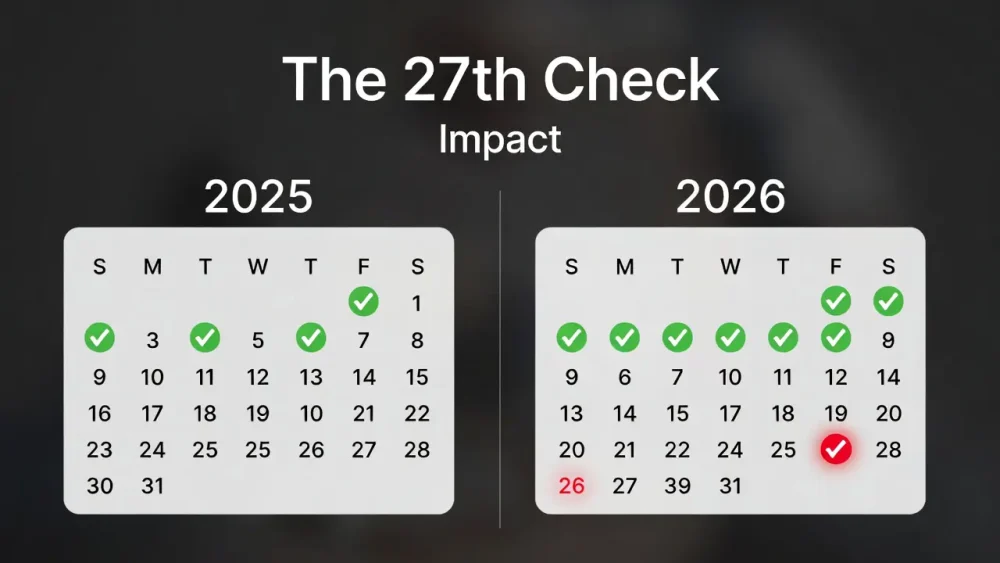
- Start Date: January 1, 2026, falls on a Thursday.
- First Payday: If your first payday is Friday, January 2, 2026, you will process checks every 14 days.
- The Math: By the time you reach December, your 26th paycheck will fall on Friday, December 18, 2026.
- The 27th Check: Two weeks later is Friday, January 1, 2027. Since this is New Year’s Day (a bank holiday), the payment obligation typically shifts to the preceding business day: Thursday, December 31, 2026.
Result: 27 pay periods fall within the 2026 W-2 tax year.
Financial Implications for Employers
This “extra” pay period can wreak havoc on cash flow and budgeting if not identified early.
| Impact Area | 26 Pay Periods (Standard) | 27 Pay Periods (2026 Anomaly) | Impact |
|---|---|---|---|
| Hourly Employees | Paid for hours worked | Paid for hours worked | Cash Flow Hit: You pay for 2 weeks of extra labor in the fiscal year. |
| Salaried Employees | Annual Salary / 26 | Annual Salary / 26 or 27? | Strategic Decision: Do you pay more, or dilute the per-check amount? |
| Benefits Deductions | Deducted 24 or 26 times | Deducted 27 times? | Compliance Risk: Over-deducting premiums or missing a “holiday” period. |
Strategic Options for Salaried Staff
Handling the 27th paycheck for salaried employees is the most contentious issue you will face. You generally have two options, each with pros and cons.
Option A: The “Pay Raise” (Do Nothing)
You continue to pay the standard bi-weekly amount calculated on a 26-period basis.What Font Is The Google Logo and What Makes It So Powerful?
- Result: Employees receive their full annual salary plus one extra paycheck (approx. 3.8% raise).
- Pro: Great for morale; no communication friction.
- Con: Increases payroll expense by nearly 4%.
Option B: The “Dilution” (Recalculate)
You divide the annual salary by 27 instead of 26 for the 2026 tax year.
- Result: The gross amount of every paycheck is lower than in 2025, but the total annual pay remains exactly the same.
- Pro: Protects the company budget.
- Con: Employees see a “pay cut” on every check. This requires massive communication efforts starting in late 2025 to avoid an employee revolt.
E-E-A-T Tip: Consult legal counsel. Some employment contracts specify an annual salary, while others specify a bi-weekly rate. Altering a bi-weekly rate to accommodate the calendar could violate contracts in certain jurisdictions.
The Tax Cliff: TCJA Expiration
Unless Congress acts to extend them, the individual income tax provisions of the Tax Cuts and Jobs Act (TCJA) of 2017 expire on December 31, 2025. This creates a “Tax Cliff” for 2026.
Projected Bracket Reversions
If the TCJA sunsets, we return to the pre-2018 progressive tax structure (adjusted for inflation).35+ Secret Midjourney V6 Prompts for Professional Logo Design in 2026
- Tax Rates: The top rate may revert from 37% to 39.6%.
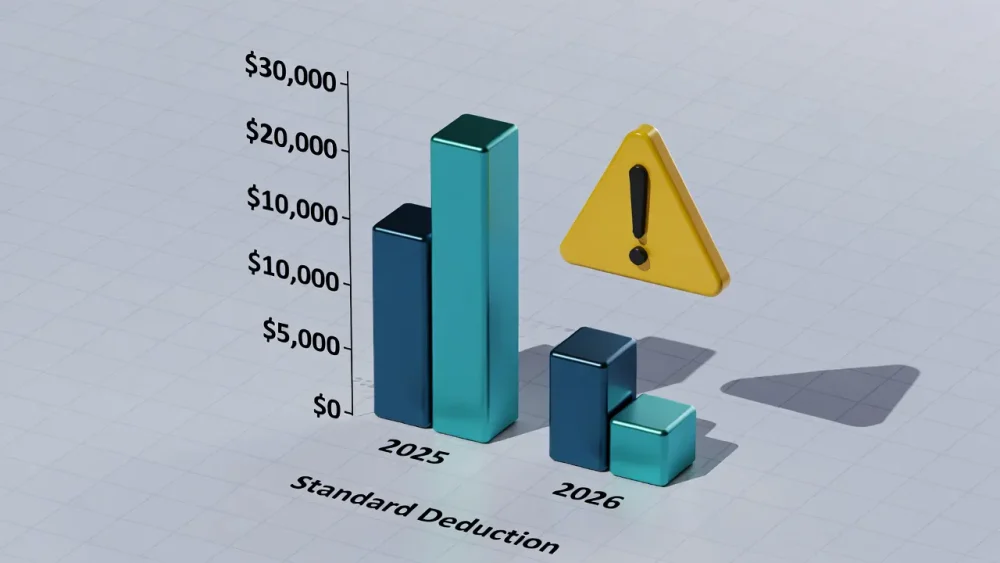
- Standard Deduction: The nearly doubled standard deduction (approx. $14,600 for singles in 2024) would be roughly halved.
- Withholding Impact: Employees will see significantly different net pay in 2026, even if their gross pay hasn’t changed.
2026 Social Security Wage Base
The Social Security Administration adjusts the taxable wage base annually based on the average wage index.
- 2025 Limit: $176,100
- Projected 2026 Limit: $184,500
- Implication: High earners will pay the 6.2% OASDI tax on an additional ~$8,400 of income, further reducing net pay.
Withholding & Benefits Strategy for 27 Periods
The 27th pay period complicates benefits administration. Most deduction schedules are built on 24 or 26 periods.
1. Health & 401(k) Deductions
- The Risk: If you deduct flat-dollar benefits (e.g., $100 for health insurance) from every check, you will collect premiums 27 times instead of 26. This overcharges the employee.
- The Fix: Designate the 27th check (likely the Dec 31, 2026 check) as a “Deduction Holiday.” Block all flat-dollar deductions for this period. Percentage-based deductions (like 401k) should likely continue to ensure the employee hits their annual max.
2. 401(k) Limits
The projected 401(k) contribution limit for 2026 is expected to rise to approximately $24,500 (plus catch-up contributions).
- Issue: If employees set a “per paycheck” contribution amount based on 26 checks, they might max out early or over-contribute if your system doesn’t have a hard cap.
- Solution: Audit your payroll software’s “annual limit” settings to ensuring automatic shut-off once the IRS limit is reached.
Future-Proofing: Payroll Tech in 2026
By 2026, payroll technology will have evolved to handle these complexities more autonomously.NVIDIA’s ‘Data-Sovereign’ Chip is the hardware star of Gartner 2026
- Earned Wage Access (EWA): The “bi-weekly” concept is slowly dying. By 2026, expect 30-40% of the workforce to demand access to wages as they earn them. This renders the “27 pay period” problem moot for daily-pay employees but complicates tax withholding remittance.
- AI Compliance: “Zero Position” payroll software will automatically detect calendar anomalies like the 27th period and suggest dilution strategies or “deduction holidays” without human intervention.

Action Plan Checklist for Employers
- Q3 2025: Confirm your specific pay dates for 2026. Identify if the 27th check applies to you.
- Q3 2025: Decide on your salary strategy (Dilution vs. Extra Pay).
- Q4 2025: Review employment contracts for “annual” vs. “bi-weekly” language.
- Q4 2025: Communicate changes to employees. If you are “diluting” pay, frame it carefully: “Your annual salary is unchanged, but it is spread over more payments.”
- Jan 2026: Monitor legislative news regarding the TCJA extension. Be ready to update withholding tables immediately if Congress passes a last-minute fix.
FAQ: Bi-Weekly Payroll 2026
Transparency is key. Use this script: “Because 2026 has an extra pay period (27 instead of 26), your annual salary is being divided by 27. You will receive the exact same total annual amount, but each individual check will be slightly smaller to accommodate the extra payment date.”
Generally, no. Since 401(k) limits are annual, an extra contribution helps the employee save more, provided they don’t exceed the IRS annual cap (projected ~$24,500).
Tax brackets will revert to 2017 levels (indexed for inflation), likely resulting in higher withholding rates and a lower standard deduction for most employees.
Yes. The IRS taxes income in the year it is paid, not earned. If the check date is Dec 31, 2026, that income goes on the 2026 W-2, potentially pushing employees into higher tax brackets.Generative Engine Optimization (GEO): The Complete Blueprint for Winning Answer Ownership in the Age of AI
No. This primarily affects employers on a bi-weekly schedule (every 2 weeks) whose first payday falls on Friday, January 2, 2026. Semi-monthly (24 pays) and monthly (12 pays) payers are not affected.