

If you executed more than 10,000 transactions this year, standard tax software will likely fail you. For high-volume traders—especially those using grid bots, arbitrage algorithms, or providing deep liquidity in DeFi—the 2026 tax season introduces new complexities with Form 1099-DA and stricter IRS audit requirements.
The Short Answer:
- Best for Unlimited Volume: CoinTracking.info (The only true “unlimited” plan without enterprise sales calls).
- Best for Complex DeFi: Summ (formerly CryptoTaxCalculator) handles complex smart contracts and liquidity pools better than any competitor.
- Best White-Glove Service: TokenTax VIP offers direct CPA access and reconciliation for portfolios with 30k+ transactions, though it comes at a premium price ($3,499+).
- Best for Massive CSV Uploads: ZenLedger boasts a 500,000 row limit per CSV file, dwarfing competitors like CoinTracker.
The era of “good enough” tax reporting is over. Below, we break down the technical constraints—API rate limits, CSV row caps, and audit trail features—that actually matter to high-frequency traders.
Quick Comparison: Top High-Volume Crypto Tax Tools
| Feature | CoinTracking.info | Summ (CryptoTaxCalculator) | TokenTax (VIP) | ZenLedger |
|---|---|---|---|---|
| Best For | Unlimited Volume | DeFi & NFTs | Hands-Off Service | Large CSV Imports |
| Max Transactions | Unlimited (Plan) | Unlimited (Custom) | 30k+ (VIP Tier) | Unlimited (Ent.) |
| Pricing (Annual) | ~$839 (Unlimited) | ~$499 (Trader) | $3,499 (VIP) | Custom / Enterprise |
| CSV Row Limit | High | High | Varies | 500,000 Rows |
| DeFi Support | Good | Excellent | Excellent (Manual) | Good |
| Audit Trail | Downloadable | Transaction Level | CPA Review | Audit Defense |
1. CoinTracking.info: The Volume King
Best for Algo-Traders & Bot Users
If you are running high-frequency trading (HFT) bots on Bybit, KuCoin, or Binance, CoinTracking.info remains the industry standard for 2026. Unlike competitors that hide their high-volume pricing behind “Contact Sales” buttons, CoinTracking offers a transparent Unlimited plan.
Why it wins for High Volume:
Your VPN Isn’t Hiding You from LLM Scrapers—It’s Training Them on Your Browsing Habits- The “Unlimited” Plan: For approximately $839/year, you get truly unlimited transaction support. There is also a lifetime license option (~€6,699) which is a massive ROI for career traders.
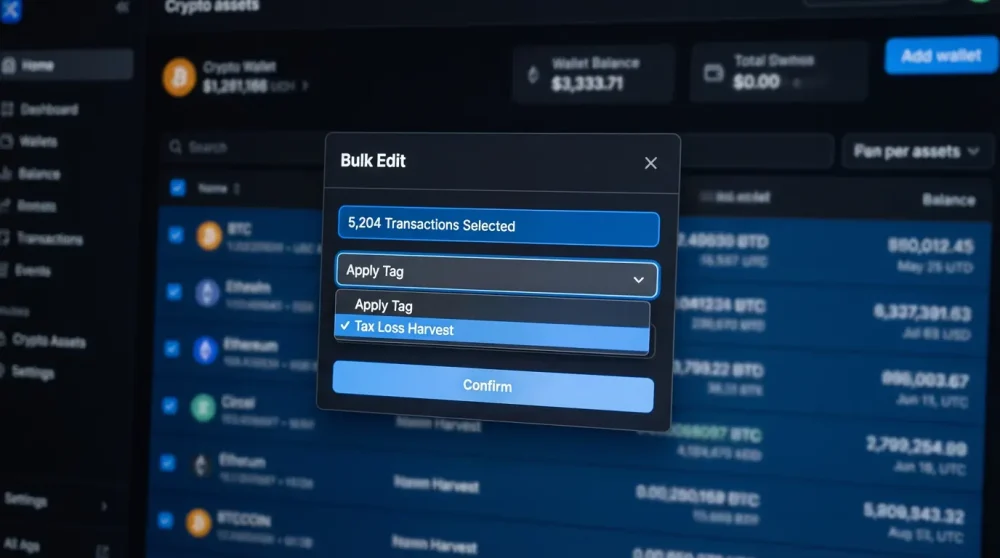
- Technical Control: It is the “Excel on steroids” of crypto tax. You can bulk edit thousands of trades, apply bulk comments, and adjust cost basis rules (FIFO, LIFO, HIFO, LOFO) with granular precision.
- API & Backup: It supports daily automatic backups of your trade data—a lifesaver if an API sync corrupts your history.
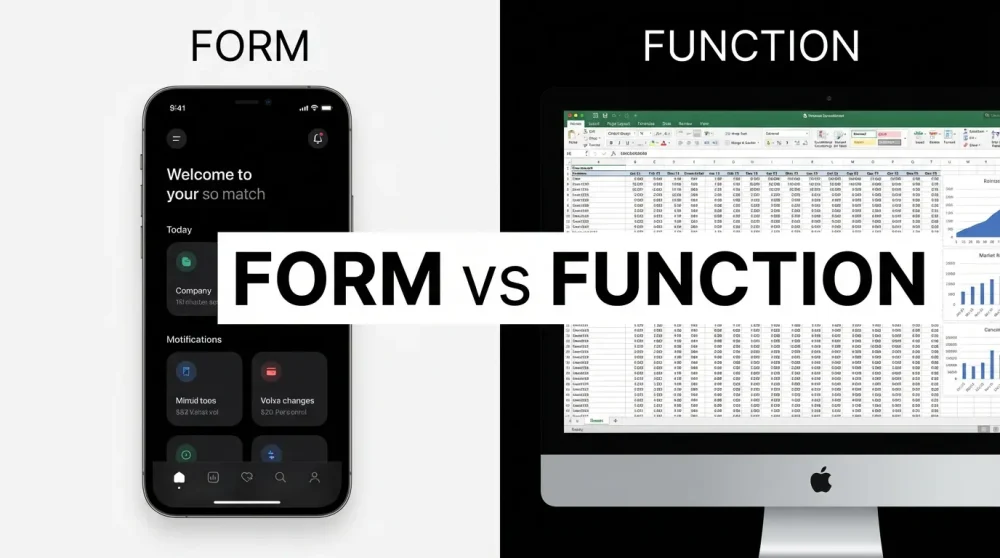
The Downside: The interface is dated. It looks like a financial terminal from 2015. However, for 100k+ transaction portfolios, function beats form every time.
2. Summ (formerly CryptoTaxCalculator): The DeFi Surgeon
Best for Liquidity Providers & On-Chain Degens
Generalist software often fails when it encounters complex smart contract interactions, such as staking LP tokens in a yield farm which then auto-compounds. Summ is built specifically to “surgically” dissect these transactions.
Why it wins for DeFi:
Simpsonizados: A Close Look at the Characters of the Simpsons- Granular Transaction Breakdown: Instead of seeing a generic “Send” or “Deposit,” Summ breaks down complex txn hashes into their component parts (e.g., separating the swap fee, the liquidity add, and the staking receipt token).
- Smart Contract Recognition: It natively recognizes over 3,500 DeFi protocols. If you are deep in Solana or Arbitrum liquidity pools, this tool saves you from manually editing thousands of “Uncategorized” errors.
- Spam Filtering: High-volume on-chain wallets are magnets for spam tokens. Summ has one of the most aggressive and accurate spam filters, preventing dust attacks from cluttering your tax report.
3. ZenLedger: The CSV Powerhouse
Best for Traders with Massive Historical Data
If your transaction history is too large for API limits—or if you are importing data from defunct exchanges like FTX or Mt. Gox—you are likely relying on CSV files.
The “Row Limit” Bottleneck: Most software (like CoinTracker) has a “row limit” per CSV upload (often around 40,000 rows). If you try to upload a file with 100,000 trades, it crashes or requires you to split the file into five parts, which breaks the internal logic of “transfers.”
ZenLedger’s Advantage:
Mycelial Data-Navigation Systems: The 2026 Architect’s Guide to Biomimetic AI Memory- 500,000 Row Limit: ZenLedger recently upgraded their infrastructure to handle CSV uploads of up to 500,000 rows and 100MB in size. This allows you to upload an entire year’s worth of HFT bot data in a single file, preserving the integrity of your transfer matching.
- Grandfathered Data: Excellent for importing legacy data formats that modern APIs no longer support.
4. TokenTax: The White-Glove Solution
Best for High-Net-Worth Individuals (HNWI)
When your volume is high enough that your time is more expensive than the software, TokenTax is the answer. Their VIP plan is not just software; it is a service.
Why it costs $3,499+:
- Human Reconciliation: You are paying for a dedicated crypto accountant to look at your “missing cost basis” errors and fix them for you.
- Audit Trail & Defense: The VIP plan includes a review of IRS inquiries and audit assistance. In 2026, with the IRS aggressively targeting “unreported crypto income,” having a CPA sign off on your massive data set provides peace of mind that software alone cannot.
- Enterprise-Grade Security: TokenTax is SOC 2 compliant and geared towards family offices and institutional funds.
Critical Features for High-Frequency Traders
The “Hidden” Bottleneck: API Rate Limits
In 2026, exchanges have tightened their public API limits. If you have 50,000 trades on Binance, a standard tax software API sync might take days or timeout repeatedly because the software hits the exchange’s “requests per minute” cap.
10 AI Game Generator Tools to Create Games Instantly- Solution: CoinTracking.info and Koinly have optimized “bulk sync” endpoints with major exchanges that are more robust than competitors. Always prefer CSV uploads for 50k+ transaction counts to avoid API timeouts.
Audit Trails & Form 1099-DA
Starting in the 2025-2026 cycle, custodial exchanges may issue Form 1099-DA. Your software must be able to reconcile what the exchange reported vs. what your self-custody wallets show.
- Look for: A “Reconciliation Report” feature (found in Koinly and Summ) that highlights discrepancies between the 1099-DA cost basis and your calculated cost basis.
Bulk Transaction Processing
You need tools that allow for Regex-based categorization.
- Example: You traded a new memecoin “PEPE2026” 5,000 times. You don’t want to tag 5,000 trades manually. CoinTracking allows you to search “Comment: PEPE2026” and apply “Treat as Personal Use” or “Mining Income” to all 5,000 rows in one click.
FAQ: High Volume Crypto Taxes
The 1099-DA establishes the “reported” cost basis. If your software shows a different basis (e.g., because you transferred assets from a cold wallet), you must have a clear audit trail proving the original purchase date and price. Summ and TokenTax excel at generating these specific reconciliation reports.
For CoinTracking, yes. For others like CoinTracker or Koinly, “Unlimited” often means “Custom Enterprise Pricing” where you must negotiate a contract. Always check the “Fair Use Policy” in the Terms of Service; some “unlimited” plans soft-cap at 100,000 transactions.
HIFO (Highest In, First Out) is generally superior for high-volume traders as it minimizes realized gains, lowering your immediate tax bill. Ensure your chosen software supports Specific Identification if you plan to use HIFO aggressively.
Technically, yes, but practically, no. Excel has a hard limit of 1,048,576 rows, and performance degrades significantly after 100k rows with complex VLOOKUP formulas for cost basis. You risk crashing your sheet and making calculation errors that the IRS will penalize.
Key Takeaways
- Don’t Rely on API Only: For volumes over 50k transactions, master the art of CSV exports to bypass API timeouts and sync errors.
- Choose Your Specialist: Use CoinTracking for pure volume/bot trading, Summ for heavy DeFi usage, and TokenTax if you want to outsource the liability.
- Watch the Row Limits: If you have massive files, ZenLedger’s 500k row limit is a technical lifesaver.
- Prepare for 2026 Audits: Ensure your software generates a granular Audit Trail report, not just a Form 8949.
Disclaimer: This article is for informational purposes only and does not constitute financial or tax advice. Crypto tax laws are subject to change. Consult a qualified CPA or tax professional for your specific situation.