

Modular laser welding systems transform how manufacturers approach precision and scalability. These adaptable platforms optimize welding processes, combining German engineering excellence with the latest fiber laser technology to drive efficiency throughout production lines.
By integrating modular solutions, companies in the automotive, aerospace, and medical device sectors can address shifting production demands while maintaining superior weld quality and throughput.
Why Modular Laser Welding Systems Matter in Modern Manufacturing
Manufacturers face mounting pressure to deliver higher-quality products faster and with less waste. Traditional welding methods often struggle to keep pace, hindered by rigid setups and long changeover times. This bottleneck affects productivity and raises operational costs significantly.
Flexibility is no longer a luxury—it’s a necessity. Modular laser welding systems meet this need by offering scalable configurations that adapt to varying production volumes and part complexities. Their design allows quick reconfiguration or expansion without comprehensive line overhauls.
These systems tackle key challenges by combining precision with adaptability. Components like fiber lasers and advanced control modules can be swapped or upgraded, enabling manufacturers to fine-tune performance on the fly. The outcome: faster cycle times, reduced downtime, and consistent weld quality.
Does software development process resemble construction site?German engineering plays a crucial role here, as companies like Sigma Laser GmbH design modular solutions that emphasize reliability and ease of integration. Their expertise ensures these systems not only meet technical demands but also complement existing workflows, making laser welding a practical upgrade rather than a disruption.
Defining Modular Laser Welding Systems: Components and Functionality
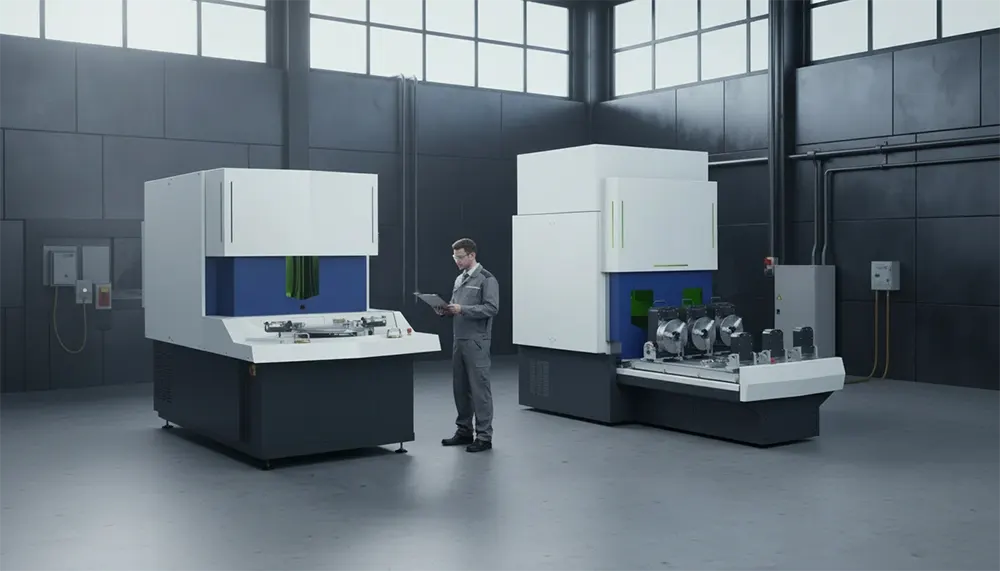
Modular laser welding systems consist of discrete, interoperable units tailored to specific welding tasks. Unlike conventional fixed assemblies, they allow manufacturers to build customized setups from standardized parts.
The foundation of these systems lies in high-performance fiber lasers. These compact, efficient sources generate focused beams ideal for welding metals with minimal thermal distortion. Combined with super-pulse technology, which delivers ultra-short, high-intensity pulses, they enable exceptional control over heat input, weld penetration, and material properties.
How to Stop Telemarketers from CallingModularity extends beyond lasers. Key components include beam delivery optics, positioners, sensor arrays, and control units—all engineered for plug-and-play compatibility. This design philosophy allows users to configure modules suited to different welding geometries, materials, or production speeds without redesigning the entire system.
Customization options range from single-head stations for simple welds to multi-head arrays for complex assemblies. Integration with automation platforms further expands capabilities, enabling synchronized operation with robots or conveyor systems.
Sigma Laser GmbH’s modular laser welding technology exemplifies this approach. Its product line offers diverse modules designed to fit seamlessly into various industrial environments, backed by precision German manufacturing standards and ongoing innovation.
Innovative Modern Business Techniques that You Can Try in 2020How Fiber Laser Technology Enhances Welding Precision and Speed
Fiber laser technology underpins the superior performance of modular welding systems. Unlike traditional laser types, fiber lasers use optical fibers doped with rare-earth elements as the gain medium, producing beams with excellent spatial quality and stability.
This technology delivers several advantages: increased energy efficiency reduces operational costs; a narrow beam diameter allows for ultra-precise welds with minimal heat-affected zones; and high beam quality enhances focusability for deeper penetration.
Super-pulse operation further refines welding capability. By emitting pulses lasting mere microseconds at high peak power, it controls the thermal profile precisely, minimizing distortion and enabling welding of thin or delicate parts without damage.
A Wide Range of Advertising Opportunities for Small BusinessThe combined effect accelerates welding speeds while maintaining tight tolerances, a crucial factor for industries requiring both throughput and quality. Sigma Laser GmbH’s Faserlasersysteme demonstrate how these innovations translate into measurable productivity gains, enabling manufacturers to meet stringent specifications with repeatable results.
Integrating Modular Laser Welding Systems into Existing Manufacturing Lines
Introducing modular laser welding requires careful evaluation of current production setups. Compatibility depends on factors such as line layout, part handling systems, and control software infrastructure.
Start by mapping your workflow to identify bottlenecks or repetitive welding tasks that would benefit most from automation and precision improvement. Then assess physical space constraints and power availability to ensure smooth installation.
Integration typically follows a phased approach. Initial modules can be deployed alongside manual or legacy welding stations, allowing operators to adapt gradually. Control systems provide interfaces to synchronize laser operation with robotic arms or conveyor belts, minimizing cycle times and ensuring consistent quality.
Case studies from automotive and aerospace sectors illustrate this process. A German automotive supplier integrated modular laser units with industrial robots, achieving a 30% reduction in welding time and a noticeable drop in rework rates. Aerospace manufacturers use similar setups to weld complex alloy components with improved repeatability and traceability.
Industries Benefiting Most from Laser Welding Automation
Laser welding automation has gained traction in sectors where precision and production speed are paramount. The automotive industry leverages these systems for high-volume assembly of safety-critical parts, such as engine components and chassis structures. Laser welding ensures consistent joint strength while reducing thermal distortion, which improves downstream assembly accuracy.
The aerospace sector adopts modular laser systems to handle exotic alloys and complex geometries in turbine blades and airframe components. Here, superior weld quality directly influences safety and performance, making laser welding indispensable.
Medical device manufacturers also benefit substantially. Fabrication of implants and surgical instruments demands welds free of contamination and micro-cracks. Modular laser welding systems provide the necessary cleanliness and precision, enabling production of reliable, FDA-compliant devices.
Efficiency gains in these industries often translate into competitive advantages. By reducing cycle times and scrap rates, manufacturers can accelerate time-to-market and optimize cost structures without sacrificing quality.
Innovations in Laser Welding Recognized by the German Design Award
The German Design Award highlights products that demonstrate outstanding innovation, quality, and usability. Award recipients set benchmarks in their industries, combining form and function to solve practical challenges.
Sigma Laser GmbH’s modular laser welding systems received recognition for integrating advanced fiber laser modules with intuitive control interfaces. Their super-pulse technology stood out for delivering unprecedented precision and flexibility, enhancing process stability in demanding manufacturing environments.
This accolade underlines the company’s commitment to engineering excellence and user-centric design. Innovations such as quick-connect modules and adaptive process controls simplify operation and maintenance, reducing downtime and training requirements.
The Future of Industrial Manufacturing with Modular Laser Welding Systems
Emerging trends suggest modular laser welding systems will become even more intelligent and interconnected. Advances in sensor technology and machine learning enable real-time quality monitoring and adaptive parameter tuning, reducing defects before they arise.
Increased automation will allow systems to self-optimize welding sequences, balancing speed and precision dynamically based on part geometry and material behavior. Integration with factory-wide AI platforms promises holistic production oversight, driving continuous efficiency improvements.
From a sustainability perspective, precise energy delivery and minimized material waste reduce the environmental footprint of manufacturing. As regulations tighten, modular laser welding systems provide a pathway to cleaner, greener production without compromising output.
What are the main benefits of modular laser welding systems in industrial production?
They offer flexibility, scalability, and high precision, improving manufacturing efficiency and reducing downtime.
How does fiber laser technology improve welding precision?
Fiber lasers provide superior beam quality and energy efficiency, enabling faster and more accurate welds.
Which industries benefit most from laser welding automation?
Automotive, aerospace, and medical device industries gain significant efficiency and quality improvements.
How can modular laser welding systems be integrated into existing manufacturing lines?
By assessing compatibility and customizing modules, these systems can be seamlessly incorporated to automate welding tasks.
What innovations in laser welding have been recognized by the German Design Award?
Innovations include advanced fiber laser modules and super-pulse technology that enhance precision and efficiency.
Explore Sigma Laser GmbH’s modular laser welding solutions to boost manufacturing efficiency. Request a consultation to tailor system integration for your production needs and experience the advantages of German engineering firsthand.
Conclusion
Modular laser welding systems have reshaped the industrial manufacturing landscape, offering a blend of flexibility, precision, and efficiency that traditional welding methods struggle to match. These systems empower manufacturers to adapt quickly to evolving demands without sacrificing quality or throughput.
As industries pursue smarter production methods, modular laser welding stands out as a strategic investment. It reduces downtime, cuts operational costs, and elevates product reliability—advantages that directly impact the bottom line.
For manufacturers aiming to stay competitive and agile, embracing modular laser welding systems isn’t just an option—it’s becoming a necessity. The technology’s potential to drive continuous improvement is clear, and its adoption is set to accelerate as more businesses recognize its value.
Modular laser welding systems offer a transformative path forward for manufacturers seeking to enhance productivity without escalating costs. Their adaptable nature ensures these systems grow alongside your production needs, minimizing downtime and maximizing operational flexibility.
As industries evolve, the ability to quickly reconfigure welding setups becomes a crucial competitive advantage. By integrating modular laser welding systems, manufacturers can reduce lead times, improve quality control, and respond swiftly to changing market demands.
Ultimately, adopting modular laser welding systems is not just an investment in technology—it’s a strategic move toward more resilient and efficient manufacturing processes that keep pace with industrial innovation.