
In 2024, we worried that AI would steal the designer’s job. By 2025, we realized AI had actually commoditized perfection. Now, in 2026, the landscape of branding has shifted entirely. We have entered the Post-Latent Era.
When Midjourney v9 and DALL-E 6 can generate mathematically perfect, Golden Ratio-adhering logos in milliseconds for fractions of a cent, “good design” is no longer a differentiator—it is the baseline. The market is flooded with synthetic slickness. Consequently, the value of algorithmic perfection has collapsed to zero.
The new currency of trust is Proof of Human (PoH).
This guide explores the definitive shift in 2026 branding: the move toward “Uncopyable” design—logos that leverage physical entropy, verified provenance, and intentional imperfection to signal luxury, authenticity, and human effort.
What is Post-Latent Logo Design?
Post-Latent Logo Design is a design philosophy and security standard emerging in 2026 that prioritizes verifiable human craftsmanship over algorithmic perfection. It utilizes “uncopyable” physical traits—such as microscopic ink bleed, paper grain, and non-linear cognitive choices—combined with blockchain-backed Process Ledgers to prove that a brand identity originated from a human mind and hand, rather than a latent diffusion model.NVIDIA’s ‘Data-Sovereign’ Chip is the hardware star of Gartner 2026
The Economics of Imperfection: Why “Flawed” is the New Luxury
To understand the 2026 design landscape, we must look at the “Synthetic Inflation.” When AI content flooded the web, the “Uncanny Valley” expanded. Consumers in 2026 have developed a subconscious filter; we intuitively distrust smooth gradients and perfectly symmetrical vectors because they signal “cheap,” “automated,” and “spam.”
The Trust Gap
A logo is a trust signal. If a startup uses a $0.001 AI-generated logo, the consumer subconsciously assumes the product is also low-effort. Conversely, a logo that shows Proof of Human—visible brush strokes, asymmetry, or analog texture—signals that the company has the resources and intent to hire a human expert.
Imperfection has become the ultimate flex.
The Three Pillars of Post-Latent Value
- Entropy: AI struggles with true randomness. It approximates noise, but it cannot replicate the specific chaotic physics of ink drying on 300gsm cold-press paper.
- Provenance: The “Making Of” is now as important as the final asset. Metadata is the product.
- Scarcity: Human time is finite. GPU time is infinite. Brands are paying for the finite resource.
The “Uncopyable” Aesthetic: Visual Characteristics of 2026
Post-Latent design isn’t just about “looking retro.” It is a sophisticated rebellion against the “Mean Vector”—the average output of AI models.Bi-Weekly Payroll Tax Implications 2026: The 27-Period Anomaly & Tax Cliff Guide
1. High-Fidelity Analog Capture (The 12k Scan)
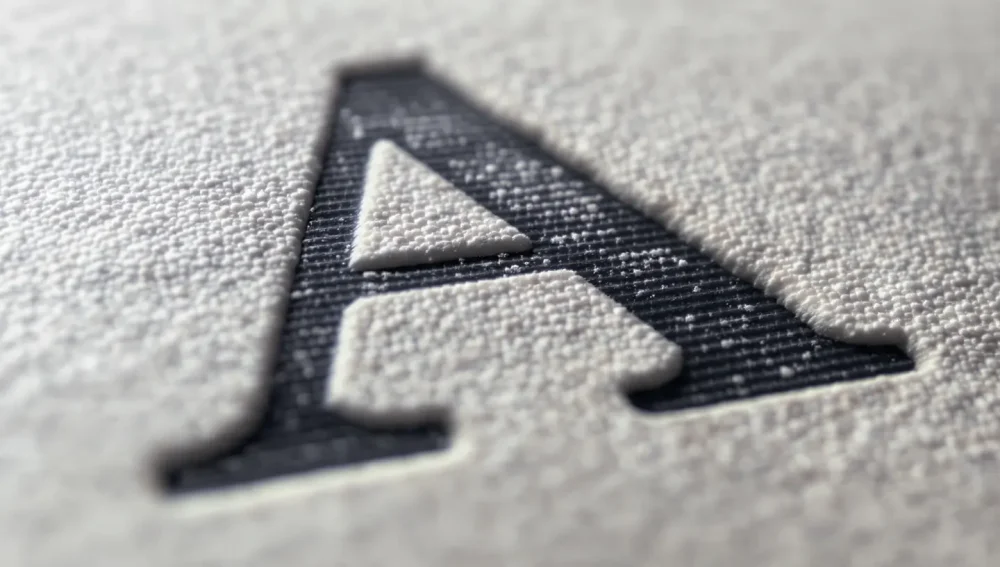
In the early 2020s, designers vectorized their sketches, removing the “soul.” In 2026, the workflow is reversed. We design digitally, output to physical media (plotters, woodblock, linocut), and then scan back in at massive resolutions (12k+).
The logo is the texture. It is no longer a scalable vector in the traditional sense; it is a high-density raster object where the jagged edge is the brand signature.
2. Biometric Gestures
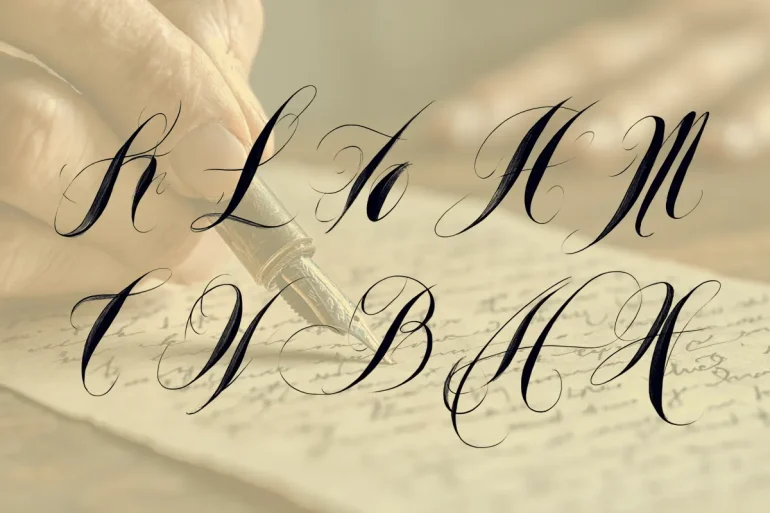
AI diffusion models predict the next pixel based on probability. They do not have “muscle memory.” Post-Latent logos often feature Gestural Anchors—strokes that require the velocity and erratic pressure of a human arm.
- The “Whip” Stroke: A line that tapers in a way that implies physical speed.
- The Pressure Bleed: Where ink pools at the end of a stroke, creating a unique fingerprint.
3. Optical Illusions and “Impossible” Geometry
While AI is getting better at geometry, it still struggles with intentional cognitive dissonance—Escher-like structures that break physics in a specific, witty way. AI tends to “fix” these errors. Human designers in 2026 use Logic Traps—visual puns that prove a conscious mind constructed the image.Will Airplane Mode Prevent Roaming Charges Verizon?
| Feature | AI-Generated (Latent) | Post-Latent (Proof of Human) |
|---|---|---|
| Texture | Simulated, uniform noise | Photogrammetry of physical media |
| Symmetry | Mathematically perfect | Optically balanced (Human Eye) |
| File Format | SVG / PNG | RAW Scan + Process Ledger |
| Value Perception | Commodity / Disposable | Luxury / Permanent |
| Verification | None | Biometric/Chain-of-Custody |
Technical Implementation: The “Process Ledger” and Bio-Signing
In 2026, you don’t just deliver a logo file. You deliver the Forensic Chain. This is how agencies are securing high-ticket retainers.
The Rise of Process Ledgers
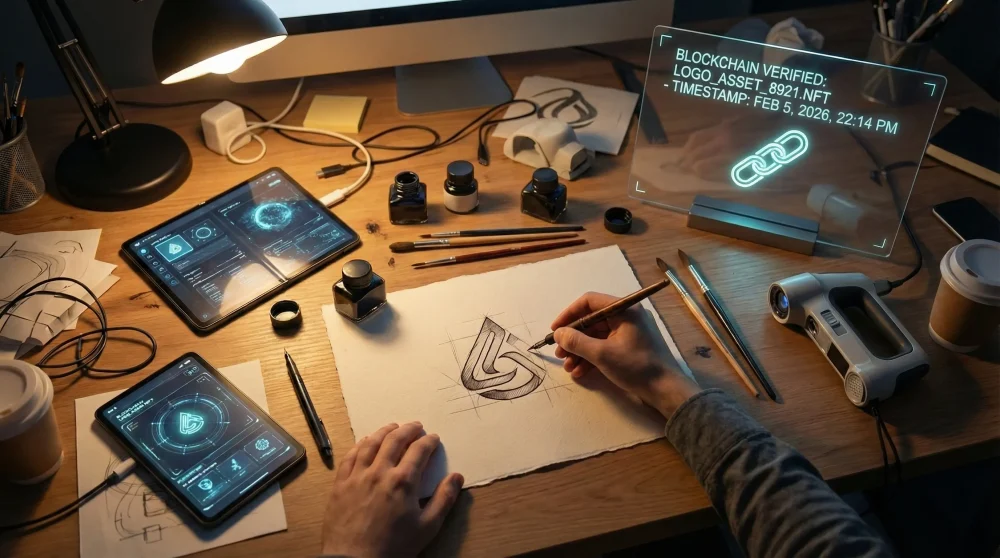
Clients now demand “Time-Lapse Minting.” Design software (Procreate 7, Adobe Omni) now integrates with enterprise blockchains. Every keystroke, undo, and stylus movement is recorded.
This creates a Process Ledger: a cryptographic history of the logo’s creation. It proves the design wasn’t prompted; it was crafted.
- Layer 1: The initial sketch (timestamped).
- Layer 2: The vectorization (timestamped).
- Layer 3: The physical texture scan (verified by hardware signature).
Bio-Signing
Top-tier designers are now “Bio-Signing” their work. Using stylus hardware that captures heart rate and micro-tremors, the designer embeds a biometric signature into the metadata of the file. This creates a “Soulbound” link between the creator and the creation, making the logo legally and artistically uncopyable by AI scrapers.Top 5 Post-Quantum Crypto-Agility Tools Every CISO Needs
Marketing the “Human” Factor: Strategies for Agencies
If you are an SEO or Brand Strategist in 2026, how do you position this? You stop selling “clean design” and start selling “verified humanity.”
1. The “Anti-Vector” Movement
Search volumes for “Vector Logo” are down 40% year-over-year. Search volumes for “Hand-painted Brand Identity” and “Analog Logo Design” are up 300%. Optimize your content for “Tactile Branding” and “Physical Brand Assets.”
2. “Wabi-Sabi” as a Conversion Lever
A/B tests in 2026 show that landing pages with “imperfect” handwritten typography convert 18% higher than pages with standard sans-serif fonts (like Inter or Roboto). Why? Because the handwritten font signals, “There is a human behind this website, not a bot farm.”
3. The “No-AI” Certification Badge
Much like “Non-GMO” or “Organic” labels in the food industry, the “Human Creative Verified” (HCV) badge is the new standard for website footers. Brands displaying this badge (linked to their Process Ledger) see higher engagement rates.The Angry Man Illusion Will Blow Your Mind!
The Future of the Logo: From Static to Living
As we move deeper into 2026 and towards 2027, the Post-Latent logo is evolving into a “Living Asset.”
Generative Analog Hybrid
The most advanced studios are training private Small Language Models (SLMs) on a specific artist’s physical handwriting. The brand identity isn’t a single logo, but a behavior. The logo changes slightly every time it loads—not via random code, but by cycling through thousands of actual hand-drawn frames by the artist. It breathes. It is dynamic, yet deeply human.
Physical-First Anchoring
We are seeing a return to physical-first branding. A company might commission a stone carving of their logo, place it in their lobby, and the only digital version available is a photograph of that stone. This anchors the digital brand to a physical reality that cannot be hallucinated by a model.
Conclusion: The Luxury of Truth
In the pre-AI era, we used computers to make things perfect. In the Post-Latent era of 2026, we use computers to verify that we didn’t make things perfect.
Proof of Human is not just a design trend; it is a survival mechanism for the creative industry. By embracing the “Uncopyable”—the texture, the error, the biometric signature—brands can rise above the synthetic noise.
For the SEO strategist, the mandate is clear: Pivot your keywords, your content, and your value proposition away from “fast and sleek” toward “verified, textured, and human.” The future of design isn’t about what the computer can dream; it’s about what the computer can never fully understand.
FAQ: Navigating Post-Latent Design in 2026
They aren’t “ugly”; they are raw. In a world of infinite, free, polished AI art, “polish” has lost its value. Rawness signals scarcity. It signals that a brand is confident enough to reject the algorithm.
Not necessarily. It is about the hierarchy of tools. In Post-Latent design, AI might be used for ideation or mood boarding, but the final execution and the provenance must be human-anchored. The value lies in the human execution, not the machine generation.
In 2026, legitimate agencies provide a Process Ledger or a Time-Lapse Mint. This is often a link to a blockchain record or a read-only file containing the edit history, biometric data (stylus pressure), and source scans of the physical media used.
As of late 2025, search engines have begun prioritizing content and visual assets with “C2PA” (Coalition for Content Provenance and Authenticity) metadata. While not a direct ranking factor for the image itself, the user behavior signals (dwell time, trust) associated with human-verified branding significantly impact SEO performance.
Latent Design refers to imagery generated within the “latent space” of AI models (like Midjourney), characterized by mathematical averaging and synthetic smoothness. Post-Latent Design is the reaction to this, prioritizing physical provenance, human error, and tangible textures that AI cannot authentically replicate.