
The ability to speak your customer’s language—literally and culturally—is no longer a “nice-to-have.” In 2026, it is a critical operational imperative. Enterprise AI Video Localization is the strategic deployment of artificial intelligence to translate, dub, and adapt video content at scale, ensuring brand consistency across global markets while adhering to strict security and compliance standards.
For global enterprises, the challenge isn’t just translation; it’s velocity and governance. How do you localize 500 hours of training content into 30 languages in a week, without leaking proprietary data or sounding like a robot?
This guide allows you to navigate the 2026 landscape of AI video localization, moving beyond basic dubbing tools to full-stack enterprise platforms.
The 2026 Landscape: Agentic Workflows & Real-Time Adaptation
The market has shifted from “Generative Engines” (focused solely on creating video) to “Integrated Communication Platforms.” The defining trend of 2026 is the Agentic Workflow.
In 2024, you prompted an AI to dub a video. In 2026, you assign an AI Agent a goal: “Localize this entire LMS course for the DACH region, adhering to our German tone-of-voice guidelines, and export to our DAM.”
Beyond the Screen: 7 Best Tools for Volumetric Video Editing in 2026Key Shifts for Enterprise Buyers
- Multimodal Adaptation: It’s not just voice. Platforms now auto-edit on-screen text (OCR translation) and modify lip movements (Lip-Sync) to match the target language perfectly.
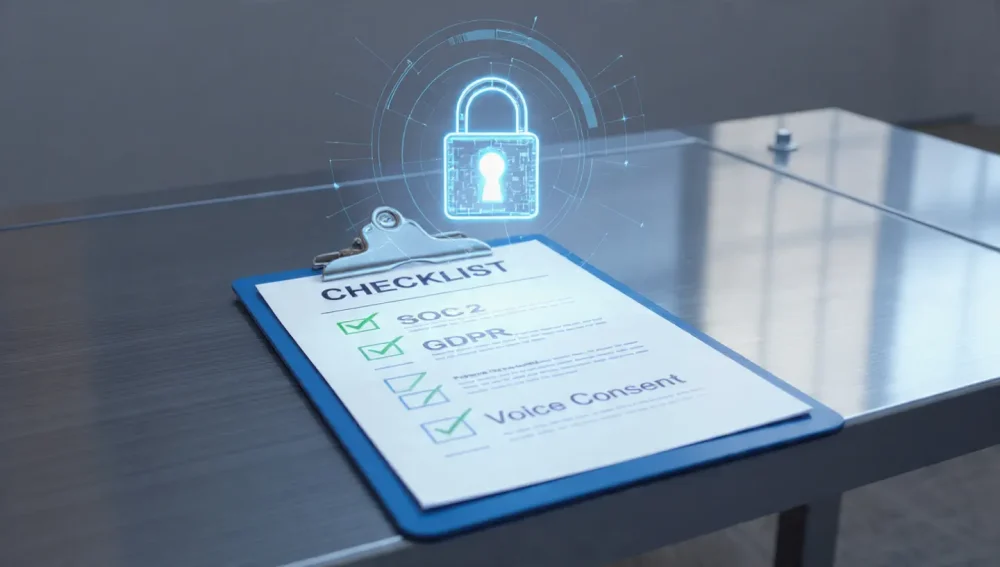
- Security First: SOC 2 Type II, ISO 27001, and GDPR compliance are now baseline requirements. “Zero Retention” policies are becoming standard for sensitive internal communications.
- API-First Architecture: The best platforms are headless. They live inside your existing CMS, LMS, or DAM (Digital Asset Management) systems via robust APIs.
Top Enterprise AI Video Localization Platforms (Ranked)
We analyzed the market leaders based on three strict enterprise criteria: Security, Scalability (API), and Quality (Lip-Sync/Voice Fidelity).
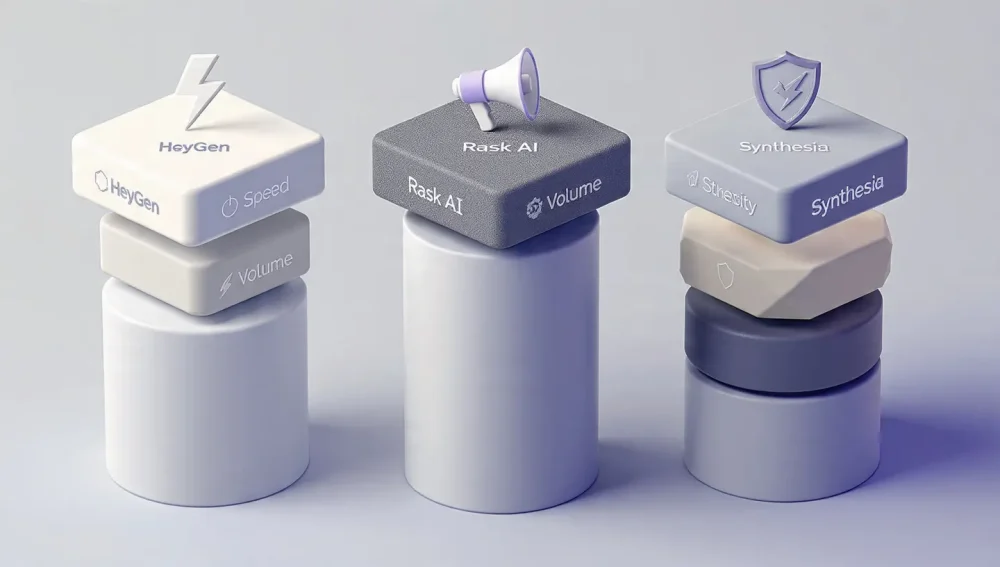
1. HeyGen: The Best All-Rounder for Scale
Best For: Marketing teams and high-volume external communications.
HeyGen continues to dominate the 2026 market with its “Streaming Avatar” and robust localization suite. It has moved beyond simple avatars to full-scale video translation that retains the original speaker’s voice and emotional intonation.
5 Best TikTok Video Editing Tools for Beginners (2026 Guide)- Key Feature: Video Translate v4. It doesn’t just dub; it reclones the speaker’s voice in 175+ languages and corrects lip movements with near-perfect accuracy.
- Enterprise Flex: The Team Plan (now legacy/integrated into Enterprise) offers a multi-user workspace with role-based access control (RBAC), ensuring that interns can’t accidentally publish unapproved content.
- API: Their “Scale” API tier allows for programmatic generation of thousands of personalized videos, ideal for sales outreach.
2. Rask AI: The Localization Specialist
Best For: EdTech, E-Learning, and Long-form Content.
While HeyGen focuses on avatars, Rask AI is the undisputed king of content adaptation. If you have a 60-minute keynote or a 10-hour training course, Rask’s processing pipeline is unmatched.
- Key Feature: Multi-Speaker Detection. Rask allows you to identify and assign different AI voices to multiple speakers in a single clip automatically.
- Enterprise Flex: Their platform supports SRT/VTT export and integrates directly with YouTube and Vimeo for automated publishing.
- API: A straightforward API that focuses on the “Upload -> Transcribe -> Translate -> Download” workflow, making it easy to build into Learning Management Systems (LMS).
3. Synthesia: The Security Fortress
Best For: Internal Communications, Corporate Training, and Regulated Industries (Finance/Healthcare).
OpenUSD Collaboration Tools for Remote Video Teams: The 2026 Ultimate GuideSynthesia remains the “safe pair of hands.” They have doubled down on security, offering the most robust compliance framework in the industry.
- Key Feature: Service-Level Agreements (SLAs). unlike many competitors, Synthesia offers enterprise SLAs on uptime and rendering speeds.
- Enterprise Flex: MSAI (Master Service Agreement Indemnification). They provide legal indemnification on copyright issues regarding avatars and voices, a massive plus for legal teams.
- Integration: The Synthesia Activities Framework for UiPath allows for Robotic Process Automation (RPA), meaning video generation can be triggered by HR events (e.g., a new hire triggers a personalized onboarding video).
Comparative Analysis Table: The 2026 Snapshot
| Feature | HeyGen | Rask AI | Synthesia | ElevenLabs |
|---|---|---|---|---|
| Primary Use Case | Marketing & Sales | EdTech & Localization | Internal Comms & L&D | High-End Dubbing Audio |
| Lip-Sync Quality | 9.5/10 (Visual) | 8.5/10 (Visual) | 9/10 (Avatar-based) | N/A (Audio Focus) |
| Language Support | 175+ | 130+ | 140+ | 32 (High Fidelity) |
| Security | SOC 2 Compliant | Encryption Standard | SOC 2 + GDPR + HIPAA | SOC 2 + HIPAA |
| API Maturity | High (Streaming focus) | High (Translation focus) | Medium (Beta features) | Very High (Low latency) |
| Pricing Model | Credit/Seat-based | Minute-based | Seat-based | Character-based |
The Enterprise Security Checklist (ISO/SOC 2)
Before signing a contract in 2026, your CISO (Chief Information Security Officer) will demand the following. Do not shortlist a platform that fails these checks.
- Data Residency: Can the platform guarantee data processing within specific regions (e.g., EU servers for GDPR compliance)?
- Voice Cloning Consent: Does the platform require explicit, dynamic consent (e.g., a video recording) to clone a voice? Avoid platforms that allow cloning from just a static audio file without verification.
- Zero Retention Mode: For highly sensitive internal videos, does the API support a mode where inputs are processed and immediately deleted without being stored for model training?
- SSO & RBAC: Does it support Single Sign-On (Okta, Azure AD) and granular Role-Based Access Control?
- Indemnification: Will the vendor cover legal costs if their AI generates content that inadvertently infringes on copyright?
Calculating ROI for AI Localization
In the enterprise, “it’s cool” is not a business case. You need to prove ROI. Here is the formula used by Fortune 500 operations managers in 2026:
25+ Best CapCut Alternatives in 2026: The Ultimate List of AI, Mobile, and Desktop EditorsTraditional Cost: (Cost of Agency + Voice Actor Fees + Studio Time + Project Management Hours) x Number of Languages = $15,000 – $25,000 per hour of finished video.
AI Localization Cost: (Platform Subscription + API Credits + Human QA Review Hour) x Number of Languages = $500 – $1,500 per hour of finished video.
The “Time-to-Market” Multiplier: Traditional dubbing takes 4-6 weeks. AI localization takes 24-48 hours.
- Formula: Revenue Impact = (Days Saved) x (Average Daily Revenue of Product Line)
Strategic Insight: Do not aim for 100% AI automation. The “Hybrid Loop” (AI Draft + Human Review) delivers 99% accuracy at 20% of the cost of traditional methods.
Technical Integration: The “Headless” Video Stack
In 2026, standalone tools are friction. The goal is integration.
- LMS Integration: Connect Rask AI to your Learning Management System (Cornerstone, Docebo). When a master English course is uploaded, the API triggers, generating 10 localized versions overnight.
- DAM Integration: Use HeyGen’s API within Adobe Experience Manager. Marketers select a region, and the video asset is automatically versioned and stored in the correct country folder.
- Customer Support: Integrate Synthesia or ElevenLabs into Intercom/Zendesk. Help articles are converted into video walkthroughs on the fly based on the user’s browser language.
Future Trends: What’s Next for 2027?
- Semantic Lip-Sync: AI will not just match lip movements to sound but will slightly alter facial expressions to match cultural nuances (e.g., adjusting a smile for high-context vs. low-context cultures).
- Real-Time Live Dubbing: We are approaching <200ms latency. Soon, CEO town halls will be dubbed in real-time for global employees, not just captioned.
- Dialect Localization: Moving beyond “Spanish” to “Rioplatense Spanish” vs. “Mexican Spanish” automatically based on user IP.
Conclusion
The “Enterprise AI Video Localization” market in 2026 is mature, secure, and ready for scale. The choice is no longer about if the technology works, but which workflow fits your governance model.
- Choose HeyGen for marketing velocity and avatar quality.
- Choose Rask AI for bulk educational content and long-form dubbing.
- Choose Synthesia for highly regulated, security-critical internal communications.
- Choose ElevenLabs if audio fidelity is your only metric.
Action Plan: Audit your content library today. Identify the top 20% of assets that drive 80% of your engagement, and run a pilot program using the “Hybrid Loop” model.
Frequently Asked Questions
Yes, but only if you use Enterprise-tier plans from SOC 2 Type II compliant vendors like Synthesia or ElevenLabs. These plans often offer “Zero Retention” policies where your data is not used to train their public models and is deleted after processing.
HeyGen and Rask AI offer “Visual Dubbing,” where the pixels around the mouth are regenerated to match the new language. Standard platforms only offer “Audio Dubbing,” where the voice changes but the lips do not match. For high-stakes external marketing, Visual Dubbing is essential to avoid the “uncanny valley” effect.
Yes. Enterprise platforms now require a “Consent Statement”—a video recording of the person explicitly granting permission to clone their voice. This prevents unauthorized deepfakes. Furthermore, legal indemnification clauses in enterprise contracts protect your company from liability.
Rask AI is generally preferred for translating existing long-form video content (like 1-hour lectures) because it preserves the original background audio and handles multi-speaker detection well. HeyGen excels at generating new content using avatars or visually dubbing shorter, high-impact marketing clips.
Not entirely. For enterprise use, the “Human-in-the-Loop” (HITL) model is the standard. The AI does 90% of the heavy lifting (transcription, initial translation, sync), and a human linguist reviews the script for cultural nuance and accuracy before the final render.
Most enterprise APIs (ElevenLabs, Rask, HeyGen) support standard inputs like MP4, MOV, and WAV. Outputs can be configured to include burned-in subtitles, separate SRT/VTT sidecar files, or even project files for editors like Adobe Premiere Pro (XML).