

The era of simple “if-this-then-that” automation is over. In 2026, we have entered the age of Agentic AI.
Traditional automation was pretty set in its ways—think of it like a row of dominos falling in line: one thing happens, and then another. But if something changes or goes wrong, the whole thing could fall apart. Agentic workflows, on the other hand, are a game-changer. They’re not just about following a set of instructions; they can think for themselves. They can plan, adjust when things go sideways, fix their own mistakes, and use different tools all on their own to reach a bigger goal.
This guide takes a look at the 10 top Agentic AI workflow automation tools for 2026. We’ve sorted them out based on how well they perform for developers, business folks, and bigger companies.
What is Agentic Workflow Automation? (The 2026 Definition)
Agentic Workflow Automation refers to systems where AI agents act as autonomous engines of execution. Unlike linear automation (RPA), agentic workflows involve:
- Multi-Step Reasoning: The AI breaks a complex goal (e.g., “Research this company and write a personalized email”) into smaller tasks.
- Tool Use: The agent autonomously decides which software (CRM, Email, Browser) to use and when.
- Memory & State: The workflow remembers context from previous steps to inform future decisions.
- Self-Correction: If a step fails, the agent retries or finds an alternative path without human intervention.
Quick Comparison: The Top 3 Contenders
| Feature | n8n | Zapier Central | CrewAI |
|---|---|---|---|
| Best For | Technical control & Privacy | Easy setup for non-coders | Multi-agent orchestration |
| Flexibility | High (Source-available) | Medium (SaaS constraints) | Very High (Python framework) |
| Cost Model | Pay per workflow execution | Task-based pricing | Open Source (free) / Enterprise |
| Agentic Power | ★★★★★ | ★★★☆☆ | ★★★★★ |

1. n8n (Best Overall for Control & Power)
n8n has cemented itself as the leader in 2026 for those who want serious, scalable agentic workflows without the “black box” limitations of closed SaaS platforms. It strikes the perfect balance between a visual node-based interface and the raw power of code.
Real-Time Deepfake Detection API for Digital Banking VerificationWhy It’s #1 in 2026
In 2026, n8n’s native AI Agent Node and LangChain integration allow you to drag and drop sophisticated agents directly into a workflow. You can connect an LLM (like GPT-5 or Claude 3.5 Opus) to a “Memory” node and a “Tool” node (e.g., Google Sheets, Slack, Custom API) and let the agent figure out the rest.
Key Agentic Features
- Self-Hosted Option: Critical for data privacy (GDPR/HIPAA).
- Advanced Loop & Branching: Unlike linear tools, n8n handles complex loops where agents can iterate until a task is “done.”
- Human-in-the-Loop: Easily insert “Wait for Approval” nodes where the agent pauses for human feedback before proceeding.
Verdict: The best choice for technical operations teams and engineers who want full control.
2. CrewAI (Best for Multi-Agent Orchestration)
CrewAI revolutionized the concept of “AI Teams.” Instead of one smart bot doing everything, CrewAI allows you to build a specialized crew: a Researcher, a Writer, and a Manager.
The Angry Man Illusion Will Blow Your Mind!Why It Stands Out
In 2026, the “Multi-Agent” approach is the standard. CrewAI creates a structure where agents delegate tasks to each other. For example, a “Manager” agent can review the work of a “Writer” agent and send it back with feedback—completely autonomously.
Key Agentic Features
- Role-Based Agents: Assign specific personas and goals (e.g., “Senior QA Engineer”).
- Autonomous Delegation: Agents can talk to each other to solve problems.
- Python-First: Built for developers, integrating seamlessly with LangChain tools.
Verdict: The go-to framework for developers building complex, team-based autonomous systems.
3. Zapier Central (Best for Non-Technical Users)
Zapier has come a long way from just doing simple zaps. Now, they’ve got this cool thing called Zapier Central. It’s like a special platform that makes it super easy to use, thanks to a natural language interface. Plus, it’s built on top of their huge library of over 7,000 integrations!
10 Ways to Edit Videos Like a Pro: A Comprehensive Guide for BeginnersWhy It Stands Out
Accessibility. You don’t need to understand loops or JSON. You simply tell your agent: “Check my email for leads, research them on LinkedIn, and if they match our ICP, draft a reply in Drafts.”
Key Agentic Features
- Natural Language Instructions: “Teach” behaviors by chatting with the bot.
- Live Data Access: Agents can “read” live spreadsheets or notion docs to answer questions instantly.
- Instant Connectivity: Leverages the existing Zapier ecosystem, meaning it works with virtually every app on earth.
Verdict: The best entry point for solopreneurs and marketing managers.
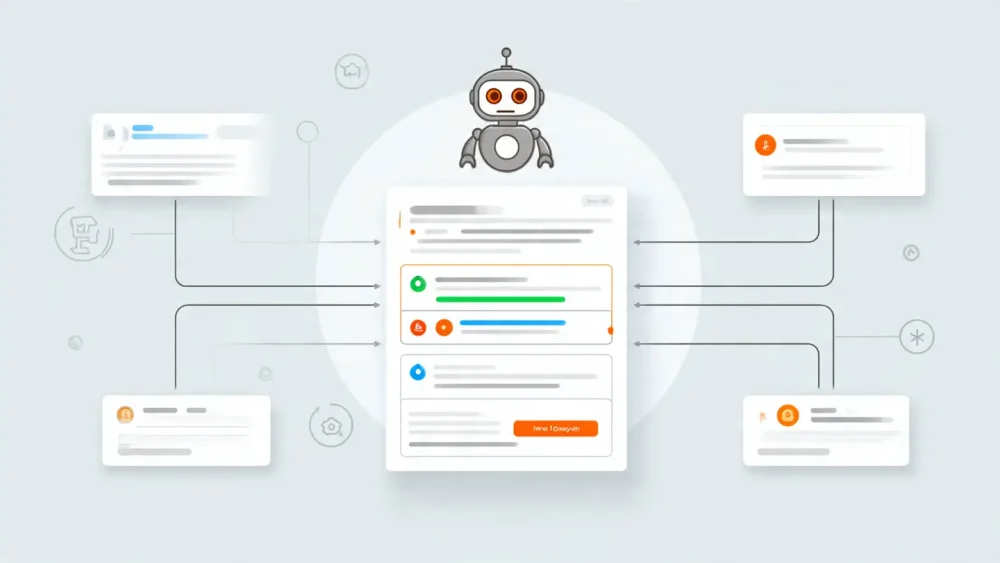
4. LangGraph (Best for Stateful, Complex Engineering)
From the creators of LangChain, LangGraph is the heavy hitter for 2026. It is designed for building stateful, multi-actor applications with LLMs.
Find Out What Does Graphic Designer Do On Daily Basis?Why It Stands Out
Most agents are stateless (they forget what happened 5 minutes ago). LangGraph is built around persistence. It allows developers to create cyclical graphs—workflows that can loop, wait, remember user preferences across sessions, and handle complex long-running tasks.
Key Agentic Features
- Cyclic Graphs: Unlike DAGs (Direct Acyclic Graphs), these support loops essential for agent reasoning.
- State Persistence: Automatically saves the state of the conversation/workflow.
- Control Flow: Fine-grained control over exactly how agents transition between states.
Verdict: The industry standard for software engineers building production-grade AI applications.
5. Relevance AI (Best for Building an “AI Workforce”)
Relevance AI positions itself not just as a tool builder, but as a platform for hiring “AI Employees.” It offers a B2B focus where you can deploy agents that work 24/7 on sales, research, or support.
Key Agentic Features
- B2B Agent Templates: Pre-built “SDR Agents” or “Research Analysts” that are ready to deploy.
- Multi-Agent Tools: Agents can be grouped into squads with shared knowledge bases.
- Visual Builder: A deeply powerful no-code builder that rivals n8n in capability but is easier to grasp for business logic.
Verdict: Excellent for agencies and SMBs wanting to “hire” AI workers rather than build tools.
6. Microsoft Copilot Studio (Best for Enterprise Ecosystems)
For organizations living in the Microsoft 365 ecosystem, Copilot Studio is the default choice in 2026. It allows you to build custom copilots that live inside Teams, Outlook, and SharePoint.
Why It Stands Out
Security and Integration. It inherits the security governance of your Microsoft tenant. Your agents can securely access internal SharePoint documents and act on behalf of users in Dynamics 365.
Key Agentic Features
- Graph Connectors: Native access to the Microsoft Graph (emails, calendar, files).
- Generative Actions: The AI dynamically chains plugins together to answer user queries.
- Governance: Enterprise-grade security, ensuring agents don’t leak sensitive data.
Verdict: The only logical choice for Fortune 500 enterprises on the Microsoft stack.
7. SmythOS (Best “Operating System” for Agents)
SmythOS has gained traction in 2026 as a comprehensive “Operating System” for AI. It offers a unified drag-and-drop interface that supports diverse models (OpenAI, Anthropic, Google) and tools.
Key Agentic Features
- Model Agnostic: Swap between GPT-5 and Claude Opus instantly within the same agent workflow.
- Hardware Integration: Unique capabilities to run agents that interact with hardware or localized environments.
- Visual Orchestration: A highly polished UI that visualizes neural-like connections between components.
Verdict: A powerful, flexible alternative to Relevance AI for those who want model agnosticism.
8. Make (Best for Visual Logic + AI)
Formerly Integromat, Make remains a powerhouse. While it started as a linear automation tool, its 2026 updates introduced “AI Assistant” modules that allow for agentic branching.
Why It Stands Out
Make it visually beautiful. Its “bubble” interface allows you to see the logic flow clearly. While it is less “autonomous” out-of-the-box than CrewAI, its granular control over data formatting makes it unbeatable for complex data mapping tasks enhanced by AI.
Verdict: Best for designers and visual thinkers who need complex logic flows with AI injection.
9. Salesforce Agentforce (Best for CRM Automation)
Agentforce is Salesforce’s answer to the agentic revolution. If your business lives in Salesforce, these agents are native, secure, and incredibly powerful.
Key Agentic Features
- Data Cloud Integration: Agents have real-time access to all customer data without complex APIs.
- Slack Native: Agents live and collaborate directly within Slack channels.
- Trusted Layer: Built-in guardrails to prevent hallucinations in customer-facing scenarios.
Verdict: Essential for Sales and Service teams heavily invested in Salesforce.
10. Lindy (Best Out-of-the-Box “AI Employees”)
Lindy takes the “Medical Scribe” and “Personal Assistant” concept to the next level. It is less of a platform for building tools and more of a platform for using them immediately.
Key Agentic Features
- Zero Setup: You literally just talk to it. “Lindy, monitor my inbox and draft replies for podcast invites.”
- Proactive: It doesn’t just wait for triggers; it can proactively nudge you or perform tasks based on time or context.
Verdict: The best “Personal AI Assistant” for executives and founders.
Comprehensive Comparison Table (2026 Edition)
| Tool | Type | Difficulty | Pricing Model | Best For |
|---|---|---|---|---|
| n8n | Low-Code / Node | Medium | Execution-based / Free Self-Host | Total Control & Privacy |
| CrewAI | Code (Python) | High | Open Source / Enterprise | Multi-Agent Teams |
| Zapier | No-Code | Low | Task-based (Subscription) | Simplicity |
| LangGraph | Code (Python) | Very High | Open Source | Complex App Dev |
| Relevance | No-Code Platform | Low-Medium | Credit-based | B2B AI Workforces |
| Copilot | Enterprise SaaS | Medium | Per User / Consumption | Microsoft Shops |
| SmythOS | No-Code OS | Medium | Consumption | Model Agnostic Ops |
| Make | Low-Code Visual | Medium | Operation-based | Visual Logic |
| Agentforce | CRM Native | Low | Per Conversation/Agent | Salesforce Users |
| Lindy | AI Assistant | Very Low | Subscription | Personal Assistant |
FAQ: Agentic AI Workflows
Traditional Automation (RPA) follows a strict script: “If A happens, do B.” If B fails, the process stops. Agentic AI is goal-oriented: “Achieve outcome X.” It can try Path A, realize it failed, try Path B, use tools, and loop until the outcome is achieved.
Yes, n8n has a “Fair Code” license. You can self-host it on your own server (Docker) for free for internal business use. They only charge for their hosted cloud version or if you embed it in a commercial product you sell.
For LangGraph and CrewAI, yes, Python is essential. For n8n, Make, and Relevance AI, no coding is required, though knowing basic logic helps. Zapier and Lindy require zero technical skills.
n8n (Self-Hosted) is the gold standard for privacy because the data never leaves your server. Microsoft Copilot Studio is also excellent for enterprises requiring SOC2 and HIPAA compliance within their tenant.
In 2026, they don’t replace humans entirely but replace roles or tasks. A “Research Agent” can replace the need for a human to spend 4 hours googling, but a human is still needed to interpret the strategy. They are “Force Multipliers.”