


In 2025 alone, deepfake fraud attempts in the financial sector spiked by 2,137%. As generative AI becomes democratized, the “zero-trust” perimeter has moved from the network firewall to the camera lens. For digital banks, the challenge is no longer just verifying identity—it’s verifying humanity.
This ultimate guide covers everything CTOs, Product Managers, and Security Architects need to know about implementing a Real-Time Deepfake Detection API. We will dissect the technology, compare top providers, and provide production-ready code patterns to secure your KYC flows against the next generation of fraud.
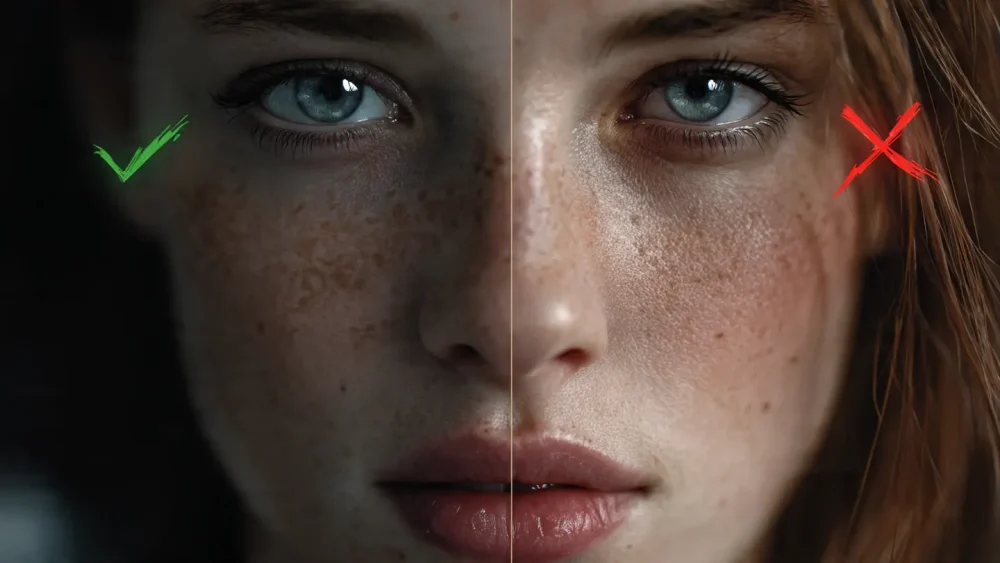
What is a Real-Time Deepfake Detection API?
A Real-Time Deepfake Detection API is a programmatic interface that enables financial institutions to instantly analyze inbound biometric data (live video, selfies, audio) during onboarding and transaction workflows. Unlike traditional KYC which checks static IDs, these APIs use advanced computer vision and deep learning to identify:
- Synthetic Media: AI-generated faces or voices (e.g., swapped faces, cloned voices).
- Presentation Attacks: Masks, screen replays, or printed photos held up to a camera.
- Injection Attacks: Virtual camera feeds or emulators injecting pre-recorded media directly into the data stream, bypassing the physical lens.
The “Zero Position” Definition:
Deepfake Detection API: A cloud-based or on-device security layer that evaluates media integrity in sub-second latency (<500ms), returning a “liveness score” or “authenticity probability” to trigger automated approval or manual review.Why Is Design So Important: Five Reasons Why Design Matters
The Core Technology: Passive vs. Active Liveness
To rank #1 in security, you must understand the mechanism. Deepfake detection isn’t magic; it’s a battle of “Active” vs. “Passive” verification.
1. Active Liveness Detection
This legacy method asks the user to perform a challenge, such as:
- “Turn your head left.”
- “Blink three times.”
- “Read these numbers aloud.”
Pros: High friction deters casual fraudsters. Cons: High drop-off rates (user abandonment). Advanced real-time deepfakes (like those seen in the 2024 Hong Kong CFO scam) can now mimic these movements in real-time.
2. Passive Liveness Detection (The Gold Standard)
Passive detection works in the background without user intervention. It analyzes:10 Best Agentic AI Workflow Automation Tools for 2026
- Micro-expressions: Involuntary muscle movements a deepfake model often misses.
- Texture Analysis: Skin texture, blood flow (rPPG), and light reflection (specular highlights) that screens cannot replicate.
- Depth Sensing: Determining if the face is a 3D object or a 2D plane.
Why Banks Are Switching: Passive detection reduces onboarding time from ~30 seconds to <2 seconds, boosting conversion rates while catching sophisticated AI clones.
Top Deepfake Detection API Providers for Banking (2026)
When selecting a vendor, “accuracy” is just one metric. You need low latency, regulatory compliance, and SDK robustness.
| Provider | Best For | Liveness Type | Key Feature | Compliance |
|---|---|---|---|---|
| Veriff | Global KYC | Hybrid | Cross-referencing device fingerprinting with biometrics. | GDPR, CCPA, SOC2 |
| iProov | High Assurance | Flashmark™ | Uses controlled screen illumination (color flash) to detect replays. | eIDAS, ISO 30107 |
| BioID | Developer Flexibility | Passive | Lightweight API with “liveness-only” mode for existing flows. | ISO/IEC 30107-3 |
| Facetec | Mobile-First | 3D Passive | Leading “ZoOm” technology for 3D face maps. | PAD Level 1 & 2 |
| Microsoft Azure Face | Enterprise Scale | Passive | Integration with the broader Azure AI ecosystem. | FedRAMP High |
Critical Selection Criteria:
- PAD (Presentation Attack Detection) Certification: Look for ISO/IEC 30107-3 Level 2 certification. This ensures the system can detect sophisticated masks and video injections.
- Latency: For real-time banking, the API response must be under 1000ms (ideally <500ms).
- False Rejection Rate (FRR): A high FRR means blocking legitimate customers. Aim for <1%.
Developer Guide: Integrating a Deepfake Shield
Implementing these APIs requires a “defense-in-depth” approach. You cannot simply trust the image; you must trust the source of the image.What Is the Impact of Artificial Intelligence on Healthcare?
1. Preventing Injection Attacks (The Silent Killer)
Fraudsters often skip the camera entirely using “virtual cameras” (like OBS) to feed a deepfake video directly into the app.
Mobile SDK Defense Strategy:
- iOS: Use
AVCaptureDevice.discoverySessionto whitelist only built-in hardware cameras. Check forisVirtualDeviceflags (iOS 17+). - Android: Use the
Camera2API and validate theLENS_FACINGcharacteristic. Block access if the device is rooted or running an emulator.
2. Python Integration Example (REST API)
Here is a production-grade pattern for calling a detection endpoint. This snippet handles the image payload and interprets the “liveness score.”
import requests
import base64
import json

def verify_user_media(image_path, user_id):
    API_ENDPOINT = "https://api.secure-provider.com/v2/detect"
    API_KEY = "sk_live_..."

    # 1. Encode image to Base64 (Standard for JSON payloads)
    with open(image_path, "rb") as image_file:
        encoded_string = base64.b64encode(image_file.read()).decode('utf-8')

    payload = {
        "data": encoded_string,
        "mode": "passive_liveness",
        "metadata": {
            "user_id": user_id,
            "device_fingerprint": "xyz-123-mobile" # Crucial for correlation
        }
    }

    headers = {
        "Authorization": f"Bearer {API_KEY}",
        "Content-Type": "application/json"
    }

    try:
        # 2. Set strict timeout to fail closed if API lags
        response = requests.post(API_ENDPOINT, json=payload, headers=headers, timeout=2.0)
        response.raise_for_status()

        result = response.json()

        # 3. Decision Logic (Zero-Trust)
        liveness_score = result.get("score", 0.0) # 0.0 to 1.0
        is_deepfake = result.get("is_synthetic", True)

        if liveness_score > 0.95 and not is_deepfake:
            return "APPROVED"
        elif liveness_score > 0.70:
            return "MANUAL_REVIEW"
        else:
            return "REJECTED_FRAUD_SUSPECTED"

    except requests.exceptions.Timeout:
        # Fail Secure: Don't approve if check times out
        return "ERROR_TIMEOUT_RETRY"
    except Exception as e:
        print(f"Integration Error: {e}")
        return "SYSTEM_ERROR"

# Usage
status = verify_user_media("selfie_capture.jpg", "user_5592")
print(f"Verification Status: {status}")
Common API Error Codes to Watch
When integrating, map these standard error codes to user-friendly UI feedback:The 7 best AI-powered VPNs that automatically switch protocols to avoid 6G throttling
- 400 Bad Request (
IMAGE_QUALITY_LOW): The user is in a dark room. UI Prompt: “Please turn on a light and try again.” - 422 Unprocessable Entity (
FACE_NOT_FOUND): Camera was blocked or pointed at the ceiling. UI Prompt: “We can’t see you. Please center your face.” - 403 Forbidden (
INJECTION_DETECTED): The SDK detected a virtual camera. Action: Silently flag account for fraud team; do not warn the user. - 429 Too Many Requests: You are being DDOSed or hitting rate limits. Implement exponential backoff.
Regulatory Compliance: The “Must-Haves”
Using a Deepfake API isn’t just about code; it’s about law.
- GDPR (Europe): You are processing biometric data (special category). You must have explicit consent and data minimization. Ensure your provider does not use your customer data to train their models without permission.
- BIPA (Illinois, USA): Requires strict retention schedules and written consent. Deepfake detection creates a “face geometry” scan, which falls under BIPA.
- KYC/AML: Regulators (like the OCC or FCA) require an “audit trail.” Your API response must be logged (e.g.,
requestId,timestamp,score) to prove you performed due diligence if a fraud case arises later.
Future-Proofing: Audio Deepfakes and “Vishing”
The next frontier is Voice Deepfakes. Fraudsters are now calling bank support with cloned voices of CEOs to authorize transfers. Strategy: Look for “Multi-modal” APIs that verify video and audio simultaneously. If the lip movements (video) do not perfectly synchronize with the phonemes (audio)—a flaw known as “lip-sync error”—the API should flag it instantly.

Conclusion
The era of trusting a static image is over. For digital banks, a Real-Time Deepfake Detection API is the new firewall. By combining passive liveness detection with device integrity checks (to stop injection attacks), you can build an onboarding flow that is frictionless for humans but impenetrable for bots.
Action Plan for 2026:Top 5 Post-Quantum Crypto-Agility Tools Every CISO Needs
- Audit your current flow: Are you vulnerable to virtual camera injection?
- Test a passive liveness vendor (start with a POC).
- Implement “fail-closed” logic in your backend code.
Don’t wait for the first million-dollar deepfake loss to upgrade your stack.