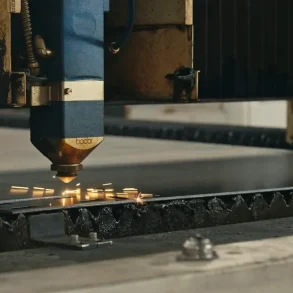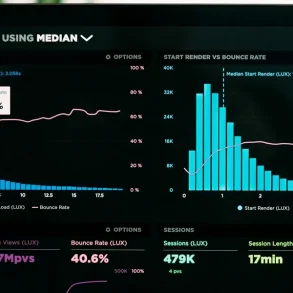

At its core, generative design is an iterative computational process synthesizing design solutions under defined circumstances. It leverages algorithms to produce outputs based on specific goals and constraints. Traditional design methods rely on human intuition alone, making it manual and limited. That’s where generative design differs, which is automated and scalable.
Mathematics is the foundation of generative design. You might not see the computations on the surface, but it’s an invisible engine powering a revolution. Every curve, structural optimization, and material distribution relies on mathematical principles. As such, it combines creative expression with empirical rigor.
Math as a Design Language: Beyond Aesthetics
It gives structure to designs. It transforms abstract numbers into tangible beauty. Different branches help in translating ideas into visuals.
- Algebra: Establish parametric relationships among design variables, enabling dynamic scaling through ratio preservation, and solve constraint systems in layout optimizations
- Geometry: Define spatial relationships through coordinate systems, govern form generation using constructive solid operations, and implement transformational logic for modular components
- Trigonometry: Calculate angular dependencies in structural connections, model curvature continuity in surface development, and resolve periodic patterns in texture mapping
Math is a pillar that enables pattern recognition, data transformation, and iterative refinement. It turns random noise into structured outputs. Therefore, generative systems cannot train effectively or produce coherent product design without relying on mathematical principles.
From Algorithms to Outcomes: Math-Driven Form Generation
Whether in furniture production or aerospace engineering, shapes, structures, and layouts are created automatically through computational processes and mathematical rules. This contradicts traditional design methods. The latter are generated using manual modeling. Form generation happens once a system uses mathematical inputs to create visual outputs. This happens without the need for the designer to manually draw every element.
How to Legally Navigate IP Bans in 2025: Proven Techniques to Bypass RestrictionsMath is crucial as it sets rules, relationships, and limitations. As such, there’s no way to define proportions and variations that will dictate the design in the absence of numbers. The designer can set parameters while the system generates solutions.
The underlying math may be complex. Designers who aren’t confident with equations don’t have to solve everything themselves. Tools powered by intelligent computation are upping the game. For instance, math AI makes it easy to handle advanced calculations and explore design variations efficiently.
Pattern Systems: Creating Repetitions and Structures
Generative designs harness mathematical patterns not for decoration but for their structural and functional properties. The following can represent optimized solutions for spatial organization problems:
Four of The Best Resources for Twitter Bootstrap- Fibonacci sequence creates visual balance through golden ratio proportions to automate spacing, scaling, and layouts for visually-appealing designs.
- Voronoi diagrams are geometric partitioning patterns of space using repeated polygons, useful for creating lightweight components and structural materials.
- Fractal systems enable efficient space-filling architectures and heat dissipation surfaces using self-similar scaling properties.
Now, let’s look at some practical applications. When designing a bike frame with honeycomb-like patterns, a Voronoi diagram uses math to make the frame strong while using minimal materials. Meanwhile, a building with branching fractal designs is shaped to spread weight evenly and control heat or sunlight.
Precision and Constraint: Designing Within Boundaries
Precision is all about ensuring every material property, curve, and dimension is numerically exact. They must not be based merely on visual estimations. Further, constraints are addressed by turning real-world requirements into rules that systems obey. Together, they transform vague ideas into optimized design solutions.
Math calculations matter to ensure all measurements are precise. For instance, designing a turbine blade requires computing micrometer tolerances, while load-bearing structures are simulated with finite element analysis.
Could the new iPhone Play a Part in Turning Design to the Dark Side?Constraints, on the other hand, enforce real-world limits. They set boundaries, such as the shape and size of the components being designed.
As a result, designs scale flawlessly, fit together perfectly, and perform predictably. There are no prototypes that look right but fail under real-world conditions. Math ensures that what works on screen works well in real life.
Optimization and Simulation: Performance-Driven Design
Behind every high-performance generative design is a world of mathematical simulation. Algorithms predict how structures will handle stress. They can identify how users will interact with components or how materials can flow within surfaces. Here are some examples of how simulations rely on numerical modeling:
The Backbone of Project Delivery: Getting Started and Being Successful- Finite Element Analysis breaks down complex shapes into tiny triangles that calculate stress points.
- Computational Fluid Dynamics is useful in designs where heat transfer, fluid movement, and airflow are crucial considerations.
- Ergonomic Modeling creates functional, comfortable, and safe designs, such as through the measurements of human body sizes.
Further, optimization algorithms consider several possibilities using math to decide which one can generate the best possible solution. Designers can specify their goals, then computations will help identify which among the variations is most suitable. Each performance goal, such as efficiency, strength, and weight, is given necessary scores.
Wrapping Up
Mathematics is at the core of generative design. It transforms numbers into solutions, providing a blueprint for innovation. Rules are defined, limits are established, and possibilities are explored through mathematical computations. Consistency, scalability, and performance are also improved. Without math, there’s no solid basis for optimizing generative designs.