

The tax landscape has shifted dramatically. With the enactment of the “One Big Beautiful Bill” Act (OBBBA) and the rolling changes from the Inflation Reduction Act (IRA), 2026 is a make-or-break year for small business sustainability strategies.
If you are a small business owner asking, “Can I deduct carbon credits on my 2026 taxes?” the answer is yes, but with strict new caveats.
This guide cuts through the legislative noise to tell you exactly how to claim deductions for carbon offsets, which energy credits are expiring by June 30, 2026, and how to structure your sustainability expenses to survive an IRS audit.
🛑 The “Carbon Credit” Misconception: Credits vs. Offsets
Before we dive into the deductions, you must understand the distinction that trips up 90% of small business owners.
| Term | What it is | Tax Treatment (2026) |
|---|---|---|
| Carbon Credit (Investment) | A tradable certificate you generate by capturing carbon (e.g., Sec 45Q). | Tax Credit: Dollar-for-dollar reduction of tax liability. Mostly for industrial players, but safe harbors now exist. |
| Carbon Offset (Purchase) | A certificate you buy to compensate for your emissions (e.g., planting trees). | Tax Deduction: Reduces taxable income. Treated as a Section 162 expense or Section 162 marketing cost. |
Key Takeaway: Most small businesses are looking to deduct the cost of purchasing offsets, not claim industrial capture credits.10 Alternatives to Visio Free That Will Help You Create Better Diagrams and Flowcharts
1. Deducting Voluntary Carbon Offsets (VCOs) in 2026
If you buy carbon offsets to claim your business is “Carbon Neutral,” you can likely deduct these costs. However, the IRS scrutiny has increased for the 2026 tax year.
The Section 162 Strategy: “Ordinary and Necessary”
Under Internal Revenue Code Section 162, business expenses must be “ordinary and necessary” to be deductible. To qualify your carbon offsets:
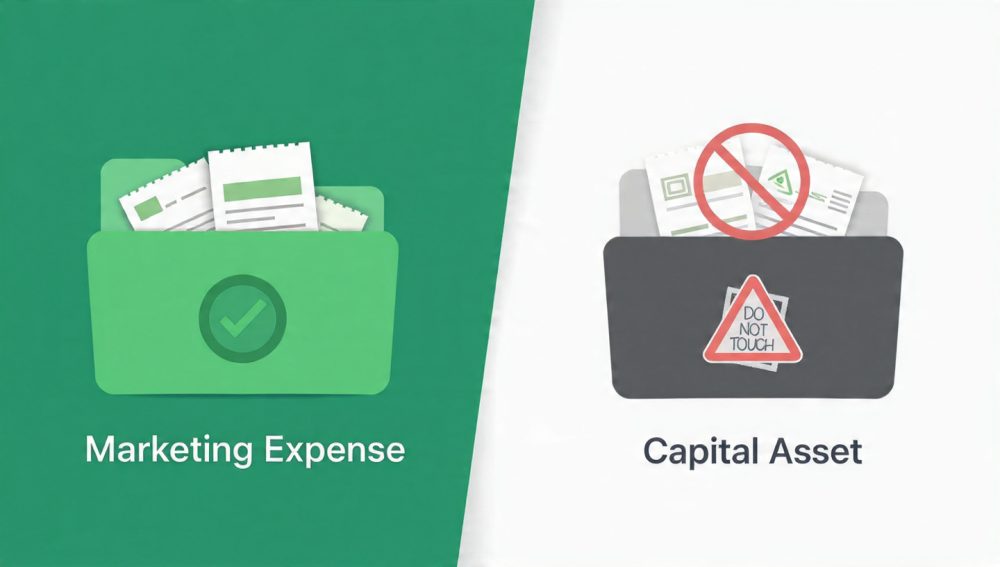
- Marketing is Key: You must demonstrate that purchasing these offsets is part of your marketing or brand positioning.
- Action: Explicitly mention your “Green Initiative” in advertising materials.
- Documentation: Keep copies of ads, website footers, or packaging that highlights your carbon-neutral status.
- Avoid the “Investment” Trap: If the IRS views your carbon credits as an investment (held for future sale or appreciation), they become a capital asset (Section 263), and you cannot deduct the cost until you sell them.
- Action: Retire the credits immediately upon purchase. Do not hold them in a brokerage account.
The Charitable Route (Section 170)
If you purchase offsets through a non-profit (501(c)(3)), you might claim it as a charitable donation.
- Limit: Generally limited to 10% of taxable income for corporations.
- Risk: You cannot claim it as a business expense and a charity deduction. The business expense (Section 162) usually offers a better tax shield for small businesses.
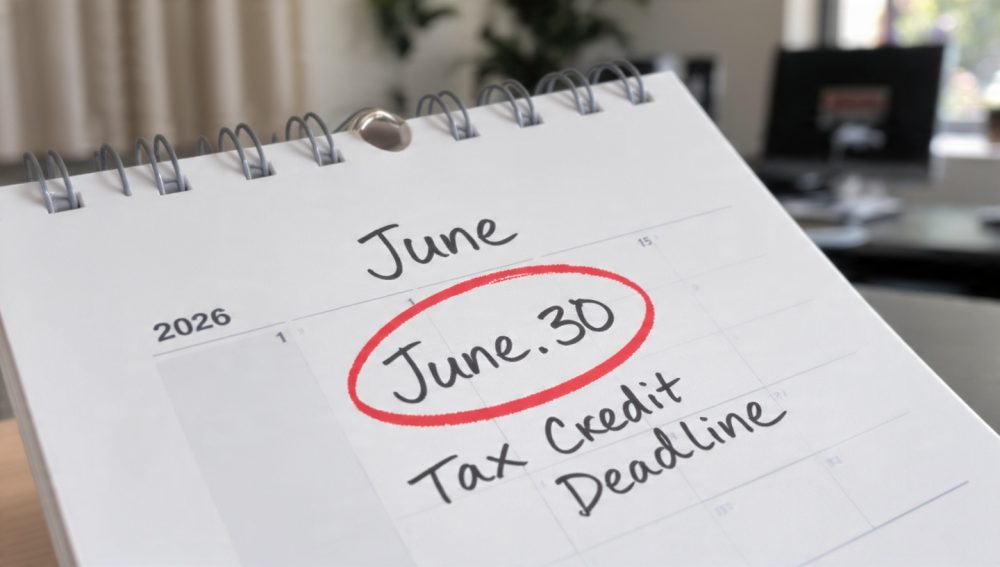
2. The OBBBA & Expiring Credits: The June 30, 2026 Cliff
The “One Big Beautiful Bill” Act (OBBBA) has set a hard deadline for many renewable energy incentives that small businesses rely on.Apple Watch Flashing Apple Logo: Causes, Solutions, and Prevention
🚨 Critical Deadline: June 30, 2026
The following credits are set to terminate or phase out strictly after the first half of the year:
- Section 179D (Energy Efficient Commercial Buildings):
- The Benefit: Immediate deduction of up to $5.00/sq ft for energy upgrades (HVAC, lighting, envelopes).
- The Change: Construction must begin by June 30, 2026, to qualify for the current generous rates.
- Strategy: If you own your building, sign the contract and commence “physical work” before July 1st.
- Section 30C (EV Charging Stations):
- The Benefit: A credit for installing EV chargers at your business (up to 30% of cost).
- The Change: This credit terminates for property placed in service after June 30, 2026.
- Strategy: Install and activate any charging stations in Q1 or Q2 of 2026.
Surviving Credits (Safe Harbors)
- Section 45Q (Carbon Capture): The OBBBA provided a “safe harbor” for 2025/2026. If you are a small manufacturer actually capturing carbon, you have more leniency on reporting requirements if the EPA reporting tool is delayed.
- Clean Fuel & Biodiesel: The small agro-biodiesel producer credit has been extended through the end of 2026.
3. Checklist: Maximizing Your “Green” Write-Offs
Don’t leave money on the table. Use this checklist to ensure you capture every eligible deduction this tax season.
✅ Marketing & Operations
- Review Invoices: Identify all payments to carbon offset registries (Verra, Gold Standard, etc.).
- Link to Revenue: Create a memo explaining how these offsets help acquire eco-conscious customers (justifying Sec 162).
- Retire Credits: Ensure you have “retirement certificates” proving the credits were used, not saved.
✅ Physical Upgrades (Before June 30)
- Audit Your Building: Need new LED lighting or HVAC? Schedule it now.
- EV Fleet: If you were planning to buy commercial EVs, check if the specific Section 45W credit applies to your vehicle weight class before the phase-out accelerates.
✅ Administrative
- Consult a CPA: The OBBBA rules are new. Do not use 2024 tax software logic for 2026 returns.
- Foreign Entity Check: New rules disqualify credits if “material assistance” comes from “Foreign Entities of Concern” (FEOC). Ensure your solar panels or battery components aren’t on the prohibited list.
People Also Ask (PAA)
Is purchasing carbon credits a business expense in 2026? Yes, generally. If you purchase carbon credits to market your business as environmentally friendly, they are deductible as an “ordinary and necessary” marketing expense under Section 162.
Can I deduct solar panels on my business taxes in 2026? Yes, but act fast. The Investment Tax Credit (ITC) rules have tightened under the OBBBA. You can still claim the credit if construction begins before the mid-year deadlines or if you fall under specific safe harbor transition rules.Flat Design vs Material Design: Which One Should You Choose?
What is the “One Big Beautiful Bill” impact on green taxes? The OBBBA generally shifts focus away from consumer subsidies (like residential solar) and tightens timelines for business credits. It emphasizes “production” over “investment,” meaning you need to prove the asset is working (placed in service) to get the cash.
Do I need to pay sales tax on carbon credits? In most US states, carbon credits are considered intangible goods and are exempt from sales tax. However, this varies by state (e.g., Washington or California may have specific interpretations).
Conclusion: Act Before Q3
2026 is a transition year. The “One Big Beautiful Bill” has signaled the end of the easy-access era for some green credits, but the Section 162 deduction for purchasing offsets remains a powerful tool for small businesses.
Your Strategy:The Best 4K Video Editing Software Free: Top Picks for 2024
- Buy offsets for branding (deduct as marketing).
- Start construction on energy projects before June 30, 2026.
- Document everything to prove “ordinary and necessary” business purpose.
Disclaimer: Tax laws like the OBBBA are subject to change and interpretation. Always consult a qualified tax professional before filing.