

In 2026, the average Total Compensation (TC) for a software engineer with 5 years of experience typically ranges between $155,000 and $215,000 in Tier 2 tech hubs, while jumping to $280,000 to $360,000+ in Tier 1 cities (SF, NYC) and Big Tech firms. However, this band varies wildly based on AI proficiency, with AI-augmented developers commanding a 20-30% premium over traditional coding roles.
By 2026, the definition of a ‘5-year engineer’ has shifted. You aren’t just coding; you’re orchestrating AI agents and driving architecture. Consequently, the market is asking a critical question: Are you being paid for your tenure or your output? We break down the real numbers behind Total Compensation (TC) in the current market. If you are looking for the definitive guide on the software engineer salary with 5 years experience, you have found it. We will move beyond basic averages to explore how equity, AI skills, and location impact your earning potential in this new economic cycle.
The 2026 Salary Snapshot: Numbers at a Glance
Global Average Base Salary vs. Total Compensation
When analyzing the software engineer salary with 5 years experience in 2026, it is vital to distinguish between base salary and Total Compensation (TC). Base salaries have stabilized around $160,000 for mid-level roles in the US. However, TC has seen more volatility. TC includes bonuses, RSUs, and signing incentives, which have rebounded significantly following the market corrections of 2024. For example, a base salary might sit at $170,000, but with the recovery of tech stocks, the TC can easily exceed $250,000.
Globally, the gap remains wide. While US-based engineers enjoy the highest brackets, salaries in Europe and APAC have seen a percentage growth outpacing the US due to the globalization of tech salary bands by 2026. Nevertheless, the ‘American Premium’ remains a dominant force in the market, heavily influencing global remote pay standards.
Percentile Breakdown: 25th, 50th, 75th, and 90th Percentiles
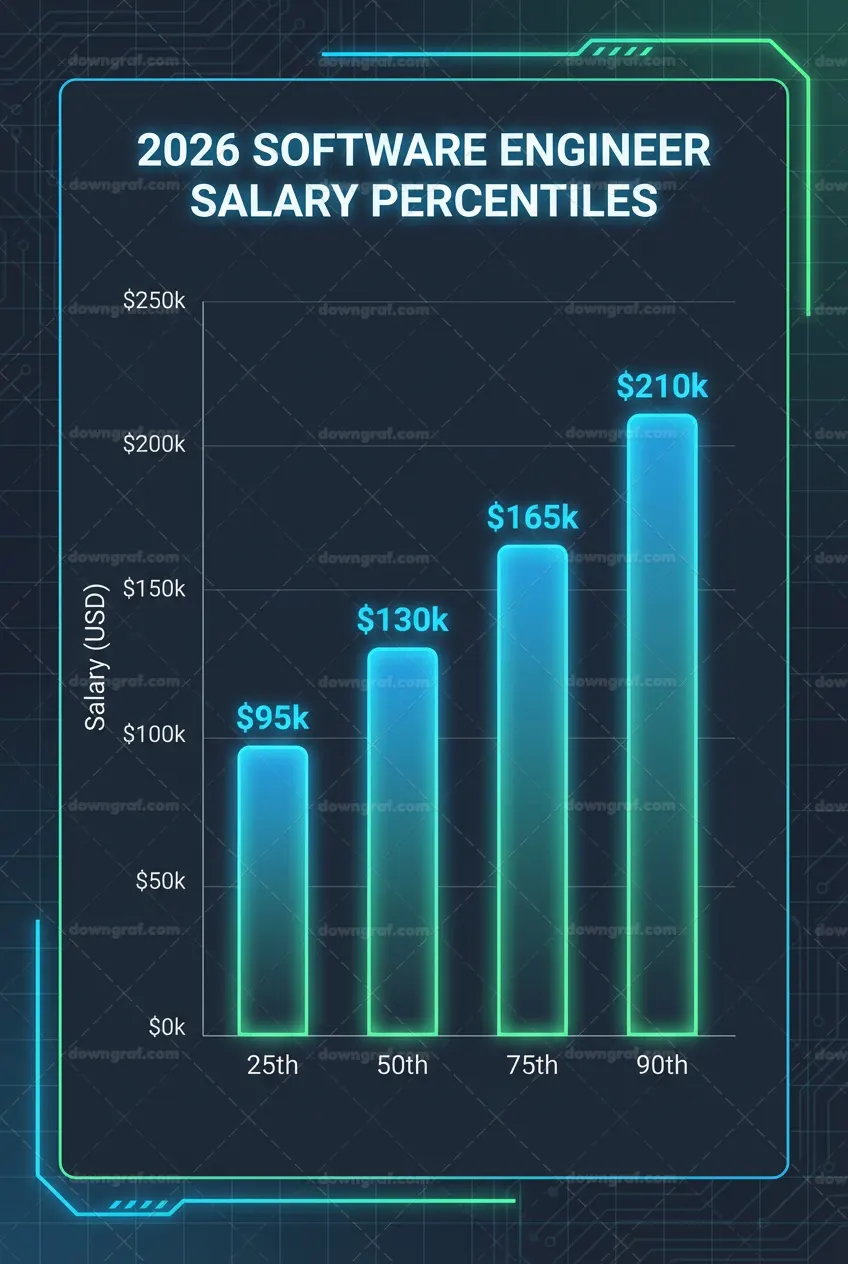
Understanding where you fall in the percentile range is crucial for benchmarking. In 2026, the 25th percentile—often representing non-tech enterprise companies or early-stage startups with lower funding—sits around $130,000 TC. The median, or 50th percentile, for a mid-level software engineer salary 2026 hovers near $185,000. This is the sweet spot for the majority of engineers working in established SaaS companies or well-funded Series B startups.
How Much Does a Pharmacy Tech Make in 2026? A Complete Salary GuideConversely, the 75th and 90th percentiles are where the numbers become staggering. At the 75th percentile, we see TCs hitting $260,000, often driven by competitive RSU packages. The 90th percentile, occupied by elite specialized talent in AI or HFT (High-Frequency Trading), breaks past $380,000. Therefore, if you possess niche skills, targeting the 90th percentile is a realistic goal.
The ‘Mid-Level’ vs. ‘Senior’ Title Ambiguity in 2026
Five years of experience is a liminal space in the 2026 tech hierarchy. Are you a Mid-Level or a Senior? The difference between mid-level and senior engineer salary 2026 is not just monetary; it is structural. In many Big Tech companies (MAMAA), 5 years might still land you at L4 (Mid-Level), whereas, at a high-growth startup, you would be hired as a Senior (L5 equivalent). The salary delta between these titles can be upwards of $60,000 per year.
Moreover, title inflation has largely disappeared. Companies are stricter about handing out ‘Senior’ titles compared to the boom years of 2021. As a result, many 5-year engineers find themselves stuck in the upper bands of ‘Mid-Level’ pay. To break through, one must demonstrate impact beyond code contribution, specifically in system design and mentorship.
Home Decor Designer Salary in 2024: Complete GuideYoY Growth: How 2026 compares to 2024-2025
Looking back at the trajectory, 2024 was a year of stagnation, and 2025 was a year of slow recovery. 2026, however, is characterized by’Strategic Growth.’ Overall compensation packages have risen by approximately 8% YoY, beating inflation. This growth is not evenly distributed; it is heavily weighted towards roles involving machine learning and cloud infrastructure.
Furthermore, retention budgets have increased. Companies realized in 2025 that replacing a knowledgeable 5-year engineer is far more costly than offering a raise. Thus, we are seeing more aggressive counter-offers and retention bonuses becoming standard in tech compensation packages.
The AI Premium: How GenAI Skills Impact Pay

Base Pay for Traditional Devs vs. AI-Augmented Devs
The single biggest disruptor in 2026 is the AI engineer salary premium. A distinct bifurcation has occurred in the market. Traditional developers who rely solely on manual coding and standard frameworks are seeing their wages stagnate. In contrast, ‘AI-Augmented’ developers—those who treat LLMs as a force multiplier—are commanding significantly higher base pay.
Average Salary of Software Engineer in US: 2024 InsightsData suggests that engineers who can demonstrate a 50% productivity boost using tools like GitHub Copilot X or similar enterprise agents are successfully negotiating salaries 15-20% higher than their peers. Employers view this efficiency as a direct cost-saving mechanism, allowing them to run leaner teams while paying individuals more.
Salary Impact of LLM Integration Experience
Beyond personal productivity, the ability to build with AI is lucrative. Experience in integrating Large Language Models (LLMs) via APIs (OpenAI, Anthropic, or open-source equivalents like Llama 4) is now a core requirement for top-tier pay. A python developer salary of 5 years experience can jump by $40,000 annually if that experience includes fine-tuning models or managing vector databases like Pinecone or Weaviate.
Consequently, the market no longer views ‘AI skills’ as a niche for researchers. It is an application-layer expectation. If you have 5 years of experience and have spent the last two years integrating RAG (Retrieval-Augmented Generation) pipelines, you are effectively senior-level in this new domain.
Prompt Engineering as a Core Competency for Mid-Levels
While ‘Prompt Engineer’ as a standalone job title has faded, prompt engineering as a skill has solidified. For a mid-level engineer, the ability to craft sophisticated system prompts that ensure deterministic outputs from stochastic models is highly valued. This skill directly correlates with the reliability of the software you ship.
Therefore, compensation reviews in 2026 often include metrics on ‘AI Literacy.’ Engineers who can debug a prompt chain as effectively as a stack trace are positioning themselves for the upper end of the mid-level software engineer salary 2026 brackets.
The Rise of the ‘AI Systems Engineer’ Role
A new hybrid role has emerged: the AI Systems Engineer. This role sits at the intersection of DevOps, Backend, and ML. These engineers do not design models; they orchestrate them. Because this role requires a deep understanding of latency, token costs, and GPU availability, it is one of the highest-paying non-management roles available for someone with 5 years of experience.
Salaries for this specialization often mirror FAANG salary levels 2026, even at smaller companies. The scarcity of talent who understands both traditional infrastructure (Kubernetes, Terraform) and AI workflows creates a seller’s market for these candidates.
Location Factors: Hubs vs. Remote Markets

Tier 1 Cities (SF, NYC, Seattle) Compensation
Despite the remote work revolution, geography still dictates the ceiling of your earning potential. Software engineer salary 5 years experience California, specifically in the Bay Area, remains the global gold standard. In 2026, the median Total Compensation for a 5-year engineer in San Francisco or NYC is approximately $295,000. The concentration of VC money and Big Tech HQs ensures these cities maintain a substantial lead.
However, the cost of living remains a heavy tax on these earnings. While the headline number is high, the disposable income parity with Tier 2 cities is closer than it appears. Yet, for career velocity and network density, Tier 1 hubs are unbeaten.
Tier 2 Tech Hubs (Austin, Miami, Toronto, Berlin)
Tier 2 hubs have matured into powerhouse ecosystems. Cities like Austin, Miami, and Toronto offer a compelling cost of living adjustment, but tech jobs often lack in Tier 1. A 5-year engineer in Austin can expect a TC of around $210,000. Since Texas has no state income tax, the net take-home pay is incredibly competitive compared to California.
Similarly, European hubs like Berlin and London have seen salary bands widen, though they still lag behind the US. The draw here is often quality of life and stability, but for pure maximization of tech salary bands 2026, the US Tier 2 market is the sweet spot for many.
Remote Pay Strategies: Location-Agnostic vs. COL-Adjusted
Remote software engineer pay has bifurcated into two distinct models in 2026: Location-Agnostic and COL-Adjusted. Top-tier companies (Airbnb, Coinbase, etc.) have largely stuck to location-agnostic pay within a country. This means if you live in rural Ohio but work for a San Francisco company, you earn San Francisco wages. This is the ‘Golden Ticket’ for remote workers.
On the other hand, most enterprise and mid-market firms enforce COL (Cost of Living) adjustments. If you move from NYC to Denver, you might face a 10-15% pay cut. Understanding which model a prospective employer uses is critical when researching the software engineer salary 5 years experience remote vs hybrid.
The’Digital Nomad’ Tax and Salary Implications
Working globally has become administratively easier but fiscally complex. Companies employing digital nomads often utilize Employer of Record (EOR) services, which can sometimes depress the gross salary offer to account for compliance costs. Furthermore, tax residency issues can eat into the senior developer’s total compensation if not managed correctly.
For 5-year engineers, the’Digital Nomad’ lifestyle often requires contracting rather than full-time employment. While daily rates can be high ($800-$1000/day), the lack of benefits and equity must be factored into the total value proposition.
Emerging Tech Hubs in 2026
New players have entered the arena. Cities like Salt Lake City (Silicon Slopes) and Pittsburgh (driven by robotics and AI) are emerging as high-value locations. In these areas, the demand for mid-level talent exceeds supply, driving wages up. A backend developer median pay in Pittsburgh is now surprisingly competitive with Chicago or Boston, primarily due to the intense competition for talent capable of working on autonomous systems.
Consequently, looking outside the traditional ‘Big 3’ cities can yield faster promotion cycles and better work-life balance without a massive sacrifice in compensation.
Salary by Tech Stack and Specialization
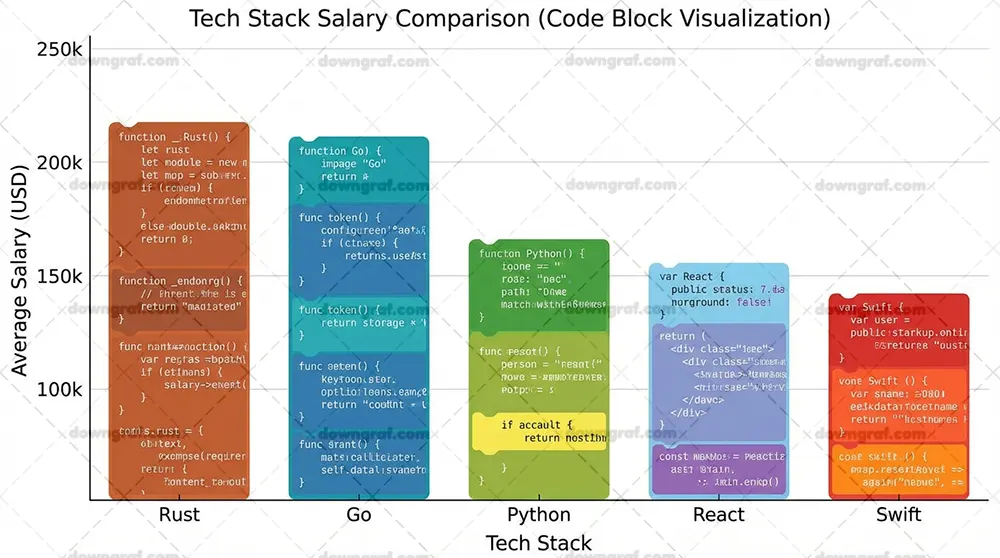
Backend (Rust, Go, Java) vs. Frontend (React, Vue, WASM)
The gap between backend and frontend compensation is widening. Backend developer median pay has surged, particularly for languages like Rust and Go, which are critical for high-performance systems and AI infrastructure. A 5-year Rust engineer can command $20,000 more in base salary compared to a Java developer at the same level due to scarcity.
In contrast, the frontend market is more saturated. While experts in React and complex state management still earn well, the barrier to entry is lower, suppressing wage growth slightly. However, frontend engineers proficient in WebAssembly (WASM) are outliers, earning premiums similar to backend specialists.
Full Stack Valuation with 5 Years Experience
The full stack developer salary of 5 years experience is a tricky metric. True full-stack engineers—those who can genuinely manage database optimization and CSS architecture—are rare and paid highly (top 10%). However, many ‘full stack’ roles are actually ‘frontend-heavy’ or ‘backend-heavy’ roles in disguise.
Generalists often face a ‘Jack of all trades’ discount unless they are in early-stage startups where versatility is the product. In 2026, the most lucrative full-stack profile is the ‘Product Engineer’—someone who builds end-to-end features with a strong focus on UX and business logic.
DevOps, SRE, and Platform Engineering Salaries
Platform Engineering has effectively replaced traditional DevOps in many organizations. The pay for these roles is consistently in the top quartile. Stability, scalability, and security are high-stakes games in 2026. A 5-year Site Reliability Engineer (SRE) often earns a higher base salary than a product software engineer because their on-call burden is higher.
Furthermore, knowledge of ‘FinOps’ (cloud cost optimization) adds significant value. Companies are desperate to control cloud spend, so an engineer who saves the company money is easily able to justify a higher mid-level software engineer salary 2026.
Mobile Development (iOS/Android/Cross-Platform)
Mobile development remains a fortress of high salaries. Despite the rise of cross-platform tools like Flutter and React Native, native development (Swift/Kotlin) is still preferred for premium consumer apps. An iOS engineer with 5 years of experience is often paid at a premium because the talent pool is smaller than the web development pool.
However, the ceiling for mobile can sometimes be lower than backend distributed systems unless you move into AR/VR development, which is seeing a renaissance in 2026 thanks to lighter, cheaper hardware.
Data Engineering and MLOps Salaries
Data is the oil of the AI age, and Data Engineers are the pipeline builders. Consequently, this is one of the highest-paying specializations. Tech compensation packages for Data Engineers often include larger equity grants because their work is foundational to the company’s valuation.
MLOps (Machine Learning Operations) is the natural evolution here. If you can deploy, monitor, and retrain models in production, your skillset is recession-proof in 2026. The average bonus for software engineer 5 years experience in MLOps is often double that of a standard web developer.
Web3 and Blockchain Developer Trends in 2026
After the volatility of previous years, Web3 salaries have stabilized but remain high for legitimate projects. The focus has shifted from speculative tokens to infrastructure and privacy (ZK-rollups). A 5-year engineer proficient in Solidity or Cairo can still earn significantly above market rates, though the positions are fewer.
Importantly, the risk profile has changed. Compensation is now heavier on base salary (USDC or Fiat) rather than purely volatile tokens, reflecting a maturation of the sector.
Total Compensation (TC) Structure Demystified
Base Salary Expectations
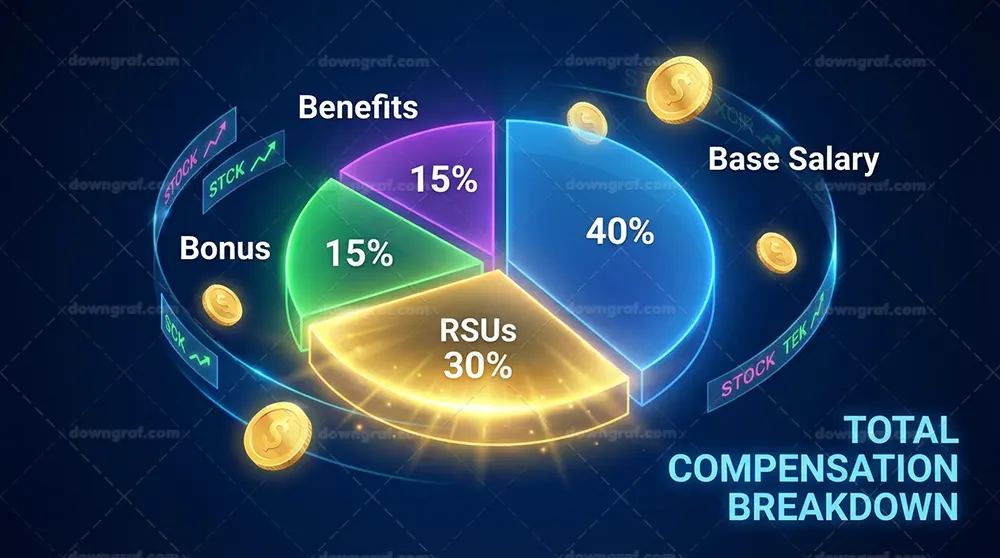
Base salary is your safety net. For the primary keyword software engineer salary with 5 years experience, the base component usually makes up 60-70% of TC in public companies, and up to 90% in smaller private shops. In 2026, do not accept a base salary under $140,000 for a mid-level role in a major US hub unless the equity upside is proven and substantial.
It is crucial to remember that base salary dictates your future raises and 401k matches. Therefore, maximizing this component during negotiation is safer than betting on variable bonuses.
Annual Performance Bonuses: What is Standard?
The average bonus for software engineer 5 years experience typically falls between 10% and 15% of the base salary. In 2026, we are seeing performance bonuses tied more tightly to company revenue goals rather than just individual performance. This aligns engineering incentives with business outcomes.
At the Staff or Senior level, these bonuses can scale to 20%+. However, always treat bonuses as ‘nice to have’ rather than guaranteed income when budgeting your life.
Equity 101: RSUs vs. ISOs/NSOs in 2026
Equity is the wealth generator. Software engineer RSU vesting schedules have evolved. The standard 4-year vest with a 1-year cliff is still common, but many companies are moving to quarterly vesting without a cliff to attract talent. For public companies, RSUs are as good as cash (liquid).
For startups, you will likely receive ISOs or NSOs. In 2026, with the IPO market thawing, these options have real potential value again. However, you must understand the strike price and the 409A valuation. Ask the recruiter explicitly: ‘What is the current preferred price versus the strike price?’ to understand your immediate paper gains.
Sign-on Bonuses and Retention Packages
Sign-on bonuses have returned with a vengeance to bridge the gap between walking away from unvested equity at a previous job. It is not uncommon for a 5-year engineer to receive a $20,000 – $50,000 sign-on bonus. This is the easiest lever to pull during negotiations because it is a one-time expense for the company.
Retention packages are also being used to prevent poaching. If you have been at a company for 3 years, you might be offered a ‘boxcar’ grant—additional stock that vests over the next two years—to keep you from jumping ship.
Benefits that Monetize: 401k Match, Remote Stipends, Health
When calculating the senior developer’s total compensation, do not ignore benefits. A 50% 401k match up to the IRS limit is effectively free money—thousands of dollars of untaxed income. In 2026, remote stipends have evolved from simple ‘internet allowances’ to substantial ‘home office infrastructure’ budgets, sometimes worth $2,000+ annually.
Additionally, ‘Health Tech’ benefits, such as subscriptions to mental health apps and concierge medicine, are becoming standard perks that would cost you significant out-of-pocket cash otherwise.
Company Tier Breakdown
Big Tech (FAANG/MAMAA) Pay Scales
The FAANG salary levels 2026 (now often referred to as MAMAA – Microsoft, Apple, Meta, Amazon, Alphabet) remain the market ceiling. An L4 (mid-level) engineer at Google or Meta can expect a TC of $300,000+. The ‘Golden Handcuffs’ here are real; the RSU grants are so significant that leaving for a startup often requires a 40% pay cut.
However, the interview bar has risen. LeetCode style questions are still present, but system design and behavioral rounds carry more weight than before. Getting into Big Tech is the surest path to retiring early, but the work can sometimes feel cog-like.
High-Growth Startups (Series B-D)
These companies offer a balance. They pay near-market base salaries (e.g., $170k-$190k for 5 years experience) but offer equity that could 10x. This is a high-risk, high-reward play. In 2026, look for startups with strong AI moats or those disrupting legacy industries like healthcare or logistics.
The culture here is faster than Big Tech. You will wear multiple hats. If the company exits successfully, your equity could be worth millions, but if it fails, your stock is worthless. Diversification is key.
Early-Stage Startups (Seed/Series A): Risk vs. Reward
Here, cash is scarce. You might see base salaries of $130,000 – $150,000. The trade-off is a massive equity percentage (0.5% – 1.0% of the company). This is for the builders who want to own the product. The software architect junior salary paradox exists here: you might be doing architect-level work for junior-level cash pay.
Only join this tier if you believe in the founders and the mission. In 2026, early-stage capital is discerning; if a company has funding, they likely have a solid product-market fit.
Non-Tech Enterprise (Fintech, Healthtech, Retail)
Banks, retailers, and healthcare giants are massive employers of tech talent. While they may not offer huge RSUs, they offer stability and excellent cash bonuses. A 5-year engineer at a major bank (like JPMC or Capital One) can earn a very comfortable $180,000 – $220,000 TC.
The work-life balance is generally better here than in startups. If you value 9-to-5 predictability, this is the sector to target. The hiring trends for 2026 show these traditional industries are aggressively modernizing their tech stacks.
Consulting and Agency Rates
Consulting firms (Accenture, Deloitte) and specialized dev agencies offer a different model. You are the product. Salaries are generally lower than product companies ($140k – $170k), but you get exposure to various industries. However, the bench risk is real; if you aren’t billable, you are vulnerable.
Freelance consulting is the alternative. Billing $125 – $175 per hour is standard for a 5-year engineer. This route requires sales skills but offers the highest potential cash flow if you can keep the pipeline full.
Negotiation Strategies for 5-Year Engineers

Leveraging Your ‘Mid-Senior’ Status
Salary negotiation for software engineers with 5 years of experience requires a delicate balance. You must position yourself not just as a doer, but as a leader. When negotiating, highlight your experience in mentoring juniors and owning features from conception to deployment. Use the phrase: ‘I am looking for a role where my compensation reflects my ability to drive architectural decisions, not just close tickets.’
This framing justifies aiming for the top of the pay band. Do not let them box you into a generic ‘Mid-Level’ bucket if your output is Senior.
How to Counter Lowball Offers
If an offer comes in low, do not react emotionally. Instead, use data. Say: ‘Thank you for the offer. Based on my research of the mid-level software engineer salary 2026 and my conversations with other companies, this number seems to fall below the market rate for a role with these responsibilities.’
Then, provide a specific counter-number. Anchoring is powerful. If you want $190k and they offer $170k, counter with $200k. They will likely meet you in the middle.
Using Multiple Offers for Leverage
The single best negotiation tool is a competing offer. Even if you prefer Company A, having an offer from Company B gives you leverage. Be transparent but professional: ‘I have another offer at $X, but I prefer your team. Can you match this?’
Companies expect this. In a competitive market like 2026, they often have a pre-approved ‘negotiation buffer’ specifically for these scenarios.
Negotiating Non-Monetary Perks (4-Day Work Week, Sabbaticals)
If they won’t budge on salary, pivot to perks. A 4-day work week (increasingly common in 2026) is effectively a 20% raise in your hourly rate. Additional vacation days, signing bonuses, or a guaranteed conference budget are other levers.
Remote flexibility is another huge point. Locking in a ‘Work from Anywhere’ clause can be worth more than a $5k raise if it allows you to live in a cheaper location.
What to Do When the Offer is ‘Best and Final’
When a recruiter says ‘Best and Final,’ they usually mean it. At this point, you have two choices: accept or walk. However, you can ask for a review trigger. ‘I accept this number, but can we write into the contract that we will review my compensation in 6 months post-hire?’
This gets your foot in the door while setting a clear expectation that you believe you are worth more, and you intend to prove it.
Frequently Asked Questions
What is the average total compensation (TC) for a software engineer with 5 years experience in 2026?
In 2026, the average Total Compensation (TC) generally falls between $160,000 and $250,000 in the United States. However, this varies heavily by location and company tier. Big Tech and high-growth startups often pay upwards of $300,000, while non-tech enterprise roles may sit closer to the $150,000 mark.
How much of a salary premium do AI and ML skills command for mid-level devs?
Engineers with practical AI/ML implementation skills–specifically in LLM integration and MLOps–command a premium of approximately 20-30% over generalist full-stack developers. This ‘AI Tax’ is one of the most significant factors in tech salary bands 2026.
What is the salary difference between remote and hybrid roles for 5-year engineers?
Hybrid roles often pay 10-15% more than fully remote roles in the same company, as employers try to incentivize office attendance. However, top-tier ‘Remote Global’ companies still pay premium rates that can outpace local hybrid salaries in Tier 2 cities.
How do stock options (RSUs) vs. base salary balance out for mid-level roles?
For mid-level roles, base salary typically constitutes 60-70% of the total package. As you move into senior roles, the equity portion grows. In 2026, RSUs are preferred in public companies for their liquidity, while ISOs in startups offer higher risk/reward profiles.
Is 5 years experience considered Senior or Mid-level in 2026?
It is the borderline. In Big Tech (FAANG), 5 years is often a strong ‘Mid-Level’ (L4). In startups and smaller firms, 5 years is frequently considered ‘Senior’ (L5). Your ability to design systems and mentor others determines which label—and pay bracket—you get.
What are the highest paying tech stacks for 5-year developers right now?
Currently, the highest-paying stacks involve Systems Engineering (Rust, Go, C++), AI/ML Data Engineering (Python, PyTorch), and specialized Blockchain infrastructure. Generalist MERN stack (MongoDB, Express, React, Node) roles tend to pay slightly less due to high supply.
How do I negotiate a raise with 5 years of experience during a performance review?
Focus on ‘Impact’ over ‘Tenure.’ Do not say ‘I’ve been here a year.’ Say ‘I delivered X feature which saved Y costs.’ Bring market data to the table showing the mid-level software engineer salary 2026 benchmarks. Be prepared to ask for equity if cash is tight.
Don’t miss: Home Decor Designer Salary
Check out: Average Salary in the United