

With the healthcare industry rapidly evolving in 2026, pharmacy technicians are taking on more responsibilities than ever before. But has the pay kept pace with these new demands? Whether you are just starting your career or looking to maximize your current earnings, understanding the 2026 pharmacy tech salary landscape is crucial to securing your financial future. If you are wondering exactly how much does pharmacy tech make, you have come to the right place. We will break down every aspect of your earning potential, from entry-level positions to advanced specialty roles.
National Average Hourly Wage
When asking how much does a pharmacy tech make an hour, we must look directly at the updated BLS data pharmacy statistics for 2026. Consequently, the national average hourly wage has seen a notable increase, settling at around $22.50 per hour. Furthermore, this base rate heavily depends on whether you work full-time or part-time, as well as your specific geographic location. Therefore, technicians entering the field today are enjoying a much stronger starting position compared to previous years.
In addition, this hourly wage for pharmacy tech professionals reflects baseline expectations before any specialized bonuses are applied. Moreover, employers are increasingly offering sign-on bonuses to supplement this hourly rate due to ongoing staffing shortages across the nation. As a result, even newly licensed professionals can negotiate better starting terms than they could just a few years ago.
National Average Annual Salary
Translating the hourly rate into an annual figure provides a clearer picture of your overall earning potential. Therefore, the national average annual salary for a pharmacy technician in 2026 is projected to be approximately $46,800 for full-time workers. However, this figure represents the median middle ground, meaning half of all technicians earn more than this amount. Consequently, your specific annual take-home pay will vary based on overtime, shift differentials, and year-end performance bonuses.
Furthermore, benefits packages play a significant role in your total compensation. For example, many large healthcare employers now offer comprehensive health insurance, 401(k) matching, and tuition reimbursement. Thus, while the base salary is $46,800, the actual financial value of a full-time position often exceeds $60,000 when factoring in these crucial employer-provided benefits.
Average Salary of Software Engineer in US: 2024 InsightsPercentile Breakdown: Bottom 10% vs Top 10% Earners
To fully grasp the pharmacy technician salary 2026 landscape, we must analyze the percentile breakdown. First, the bottom 10% of earners typically make around $33,500 annually. Generally, these are entry-level individuals with less than one year of experience, working primarily in low-volume retail settings. Therefore, this lower percentile represents the absolute baseline for those just entering the workforce without any formal certification.
On the other hand, the top 10% of earners are pulling in well over $68,000 a year. Consequently, what separates these high earners from the bottom tier is usually advanced training, years of experience, and specialization. Furthermore, these top earners often hold the CPhT-Adv credential and work in specialized clinical or government settings. As a result, the income gap highlights the clear financial benefits of pursuing ongoing education in this field.
Historical Wage Growth: 2020 vs 2026
Understanding the pharmacy technician wage growth 2026 trends requires looking back at the industry just a few years ago. In 2020, the median annual wage was roughly $35,100. However, due to unprecedented inflation, a global pandemic, and increased clinical responsibilities, wages have surged dramatically. Consequently, the profession has experienced an impressive 33% wage growth over the last six years, significantly outpacing many other allied health careers.
Software Engineer Salary Guide (5 Years Experience): 2026 Benchmarks & TrendsMoreover, this historical wage growth proves that the role is shifting from a standard retail job to a highly respected clinical support profession. Therefore, as states continue to expand what technicians are legally allowed to do, employers are forced to raise their compensation packages. In addition, advocacy from industry groups has helped solidify higher baseline pay structures that protect workers from cost-of-living increases.
Salary by Work Setting: Where You Work Matters

Retail and Chain Pharmacies (CVS, Walgreens, Walmart)
Retail pharmacy pay traditionally represents the starting point for most new technicians entering the industry. Consequently, the pharmacy tech starting salary 2026 for large chains like CVS, Walgreens, and Walmart averages between $18.00 and $21.00 per hour. However, this environment is known for its high stress, demanding customer service requirements, and heavy prescription volume. Therefore, many view retail as a stepping stone rather than a final career destination.
Furthermore, despite the lower baseline pay, retail chains offer unique advantages such as flexible scheduling and on-the-job training programs. For example, many national chains will pay for your PTCB exam and provide study materials if you agree to work for them for a set period. Moreover, working in retail builds foundational skills in insurance billing and patient communication that are highly valued in higher-paying settings.
The Average Salary in the United States – Exploring Key Sectors and TrendsHospitals and Clinical Settings
Transitioning into a hospital environment is one of the most reliable ways to boost your income. Consequently, the hospital pharmacy technician salary currently averages around $26.00 to $29.00 per hour. Furthermore, a clinical pharmacy technician handles complex tasks such as preparing IV medications, managing automated dispensing cabinets, and conducting patient medication histories. Therefore, the higher risk and required precision justify a standard 15-20% wage premium over retail positions.
In addition, hospital settings often provide substantial shift differentials for evening, overnight, or weekend work. As a result, an experienced hospital tech working the night shift can easily exceed $35.00 per hour. Moreover, these clinical environments usually offer superior retirement benefits and union protections, making them highly desirable for long-term career growth.
Mail-Order and Remote Telepharmacy
The rise of remote healthcare has completely transformed the industry, creating an abundance of remote pharmacy tech jobs. In 2026, telepharmacy salaries are highly competitive, averaging $24.00 per hour. Furthermore, these positions allow technicians to process prescription data, handle prior authorizations, and perform customer service duties from the comfort of their home offices. Therefore, the savings on commuting and professional wardrobing make this a highly lucrative option.
Moreover, the expansion of telepharmacy means that workers in rural, low-cost-of-living areas can secure wages benchmarked to larger metropolitan cities. Consequently, remote data entry roles are in incredibly high demand. In addition, companies hiring for these roles prioritize speed, accuracy, and strong computer skills, often offering performance bonuses based on daily prescription processing metrics.
Specialized Compounding Pharmacies
Specialized compounding pharmacies require a meticulous skill set, and their compensation reflects this demand. As a result, compounding pharmacy pay frequently starts around $28.00 per hour and scales upward with experience. Furthermore, technicians in these roles create customized medications that are not commercially available, which requires strict adherence to USP guidelines for both sterile and non-sterile preparations.
Therefore, obtaining a specialized certification like the Compounded Sterile Preparation Technician (CSPT) is highly recommended for this setting. Moreover, the risks associated with handling hazardous drugs or precise hormonal creams dictate higher base pay. Consequently, this niche sector attracts detail-oriented professionals who prefer a quiet, laboratory-like environment over a bustling retail floor.
Government and VA Facilities
Working for the federal government, particularly at Veterans Affairs (VA) hospitals, offers some of the best overall compensation packages available. Consequently, technicians in these roles are paid according to the General Schedule (GS) pay scale, usually starting at GS-5 or GS-6 levels. Therefore, hourly rates often exceed $27.00 per hour, paired with unparalleled federal benefits, pensions, and job security.
In addition, government roles provide structured, predictable step increases in pay based on years of service. Furthermore, VA facilities prioritize hiring veterans, but they routinely employ civilians to meet high patient demand. As a result, securing a government position is highly competitive, yet it remains one of the most financially stable career paths for a dedicated pharmacy technician.
Long-Term Care Pharmacies
Long-term care (LTC) pharmacies service nursing homes, assisted living facilities, and rehabilitation centers. Consequently, technicians in this setting average around $25.00 per hour. Furthermore, the work environment is unique because it involves closed-door operations without direct patient interaction. Therefore, the daily routine focuses heavily on compliance packaging, bubble packing, and organizing daily medication regimens for large groups of residents.
Moreover, LTC pharmacies operate around the clock to ensure timely medication deliveries to facilities. In addition, this continuous operation allows technicians to pick up extensive overtime and weekend shifts. As a result, motivated individuals can significantly inflate their base salary by taking advantage of the demanding delivery schedules required in long-term care logistics.
Pharmacy Tech Pay by State: 2026 Geographic Breakdown

Top 5 Highest Paying States for Pharmacy Techs
Geography plays a massive role in your earning potential, and the highest paying states for pharmacy techs clearly illustrate this divide. Consequently, California, Washington, Alaska, Oregon, and New York consistently rank at the top of the pay scale. Furthermore, in states like California and Washington, the average hourly wage easily surpasses $29.00 per hour. Therefore, technicians willing to relocate to the West Coast or the Northeast can see an immediate and dramatic increase in their base salary.
In addition, these top-paying states usually have strict licensing and certification requirements, which limits the labor pool and drives up wages. Moreover, aggressive union representation in states like California ensures mandatory annual raises and excellent staffing ratios. As a result, while the barrier to entry might be slightly higher due to state board exams, the financial payoff is undeniably substantial.
Top 5 Lowest Paying States
Conversely, certain regions lag significantly behind the national average. Therefore, the lowest-paying states typically include Mississippi, Arkansas, West Virginia, Alabama, and South Dakota. Consequently, the average hourly wage in these states often hovers around $17.00 to $18.50 per hour. Furthermore, these areas generally have lower educational requirements for entry-level jobs, meaning the market is often saturated with uncertified applicants.
However, it is important to contextualize these lower wages. In addition to a smaller paycheck, technicians in these states generally face fewer advanced clinical opportunities. Moreover, large retail chains heavily dominate the job market in these regions, which suppresses overall wage growth. As a result, professionals in these states must pursue national certifications aggressively to stand out and negotiate better pay.
Cost of Living Adjustments (COLA) Impact
While looking at the raw pharmacy technician salary by state 2026 data is helpful, understanding the Cost of Living Adjustment (COLA) is absolutely vital. For example, earning $30.00 an hour in San Francisco might yield a lower functional quality of life than earning $22.00 an hour in Ohio. Consequently, real take-home pay is drastically affected by local housing costs, state income taxes, and regional inflation rates.
Furthermore, employers in high-inflation areas have had to implement mandatory COLA raises to retain their workforce. Therefore, when evaluating job offers across state lines, you must calculate your purchasing power rather than just the gross salary. In addition, the Sun Belt states, such as Texas and Florida, are currently offering a
Top Factors That Influence Your Income

Certification (PTCB and ExCPT)
One of the most immediate ways to boost your income is by obtaining a national certification. Consequently, PTCB certification or passing the ExCPT exam typically guarantees a pay increase of $2.00 to $4.00 per hour. Furthermore, many states now legally mandate certification before you can even touch a prescription. Therefore, becoming a certified pharmacy technician (CPhT) is no longer just optional; it is a critical baseline for career advancement.
In addition, certified techs are eligible for specialized roles that uncertified workers cannot legally perform. For example, sterile compounding and advanced data entry roles require active national certification. As a result, employers prioritize certified candidates during the hiring process, offering them higher starting rates and better schedules right out of the gate.
Years of Experience
Experience is a massive driver of wage growth in the pharmacy sector. Therefore, an entry-level technician with zero to one year of experience will almost always start at the bottom of the pay band. However, as you accumulate three, five, or ten years of practical experience, your value to the pharmacy increases exponentially. Consequently, senior technicians are heavily relied upon to train new hires and manage complex insurance rejections.
Moreover, experienced technicians often reach the top of their employer’s pay scale within seven to ten years. In addition, leveraging your years of experience is the best way to negotiate a higher starting salary when transitioning to a new employer. Thus, loyalty and longevity in the field translate directly into steady, reliable annual merit increases.
Shift Differentials (Nights, Weekends, Holidays)
If you are willing to work unconventional hours, shift differentials can dramatically inflate your paycheck. Consequently, working overnight shifts at a 24-hour retail location or a major hospital often comes with a premium of $3.00 to $5.00 extra per hour. Furthermore, weekend and holiday shifts can offer time-and-a-half or even double pay depending on the employer’s policies.
Therefore, young professionals or those with flexible lifestyles can maximize their earnings simply by adjusting their availability. In addition, night shift roles are usually less chaotic, with minimal patient interaction, allowing for a focused, steady workflow. As a result, many technicians specifically seek out “third shift” hospital roles to secure a higher base income without needing additional certifications.
Union Representation
The growing trend of unionization among healthcare workers in 2026 has significantly impacted pharmacy tech wages. Therefore, technicians working in unionized environments generally enjoy higher baseline salaries, guaranteed annual cost-of-living raises, and superior health benefits. Consequently, unions negotiate aggressive contracts that protect workers from arbitrary wage stagnation and unsafe staffing ratios.
Moreover, union representation provides a clear, transparent grievance process for wage disputes. In addition, non-union pharmacies in highly unionized cities often have to raise their own pay rates just to compete for talent. Thus, securing a position within a unionized hospital or retail chain is a highly effective strategy for long-term financial security.
Bilingual Skills
In our increasingly diverse society, bilingual skills are a highly monetizable asset in the pharmacy world. Consequently, technicians who fluently speak Spanish, Mandarin, Tagalog, or other regional languages can often negotiate a specific bilingual pay differential. Furthermore, retail chains and community clinics desperately need staff who can accurately communicate medication instructions to non-English speaking patients.
Therefore, this skill directly improves patient safety and adherence, making bilingual technicians incredibly valuable to pharmacy managers. In addition, many employers will test your language proficiency during the interview process and immediately attach a $1.00 to $2.00 per hour premium to your contract. As a result, leveraging your language skills is an easy way to stand out in a competitive job market.
Education Level (Associate Degrees)
While a high school diploma is the minimum requirement, advancing your education can positively impact your salary. Therefore, technicians who hold an Associate Degree in Pharmacy Technology often command higher starting wages. Consequently, these degree programs provide comprehensive education in pharmacology, medical billing, and anatomy, making graduates highly competent from day one.
Moreover, certain hospital systems require an associate degree for promotion into management or administrative tracks. In addition, completing an accredited degree program often waves the experience requirement needed to sit for national board exams. Thus, while not strictly mandatory, higher education provides a solid foundation for accelerating your earning potential and accessing exclusive clinical roles.
How to Maximize Your Earnings as a Pharmacy Tech
Pursue Advanced Certifications (CSPT, CPhT-Adv)
If you want to access the highest paid pharmacy technician jobs, you must look beyond basic credentialing. Consequently, obtaining the CPhT-Adv credential (Advanced Certified Pharmacy Technician) signals to employers that you possess elite industry knowledge. Furthermore, acquiring specialized certificates in hazardous drug management, billing, or immunization administration directly justifies aggressive pay raises.
Therefore, proactive technicians who continuously build their resume with advanced certifications are the ones securing promotions. In addition, earning the Compounded Sterile Preparation Technician (CSPT) certification is almost a prerequisite for high-paying hospital IV room positions. As a result, investing time and money into these advanced tests yields a massive return on investment over the life of your career.
Transition into Leadership (Lead Tech, Pharmacy Manager)
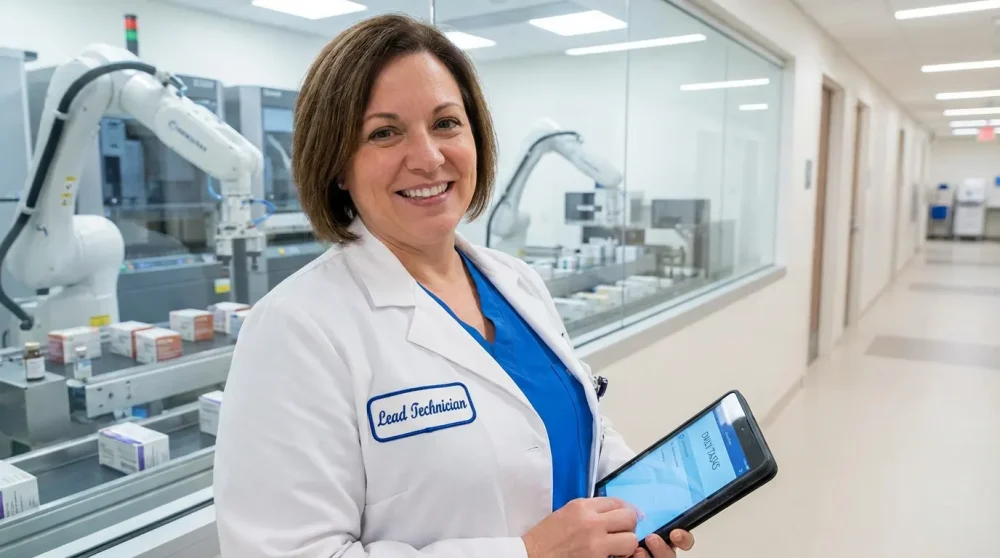
Moving off the dispensing bench and into leadership is a proven strategy for wage growth. Consequently, stepping into the role of a lead pharmacy technician comes with supervisory responsibilities, scheduling duties, and a significant bump in pay. Furthermore, lead techs act as the bridge between the staff and the pharmacist-in-charge, making them indispensable to the daily operation.
Moreover, some large hospital networks have created non-pharmacist pharmacy manager positions to handle logistics, payroll, and HR tasks. In addition, these administrative roles can easily push a technician’s salary past the $70,000 mark. Thus, demonstrating strong leadership, conflict resolution, and organizational skills is essential for climbing the pharmacy corporate ladder.
Specialize in Pharmacy Purchasing and Inventory
Inventory management is the financial lifeblood of any pharmacy, making the buyer role incredibly important. Therefore, transitioning into a purchasing position can dramatically increase your income, as the pharmacy purchaser salary regularly exceeds $30.00 per hour. Consequently, these specialists are responsible for negotiating with drug wholesalers, managing drug shortages, and ensuring optimal stock levels.
Furthermore, this role requires exceptional analytical skills and a deep understanding of pharmaceutical supply chains. In addition, successful purchasers save their facilities thousands of dollars a week by minimizing expired drugs and optimizing bulk orders. As a result, employers gladly pay a premium for technicians who can master the financial side of pharmacy operations.
Leverage AI and Automated Dispensing System Expertise
In 2026, technology is at the forefront of the industry, and mastering AI dispensing systems is highly lucrative. Consequently, technicians who specialize in programming, troubleshooting, and maintaining robotic dispensing machines like Omnicell or Pyxis are in massive demand. Furthermore, hospitals rely heavily on these systems to prevent medication errors, meaning downtime is unacceptable.
Therefore, becoming the resident expert on automation technology allows you to carve out a highly specialized, high-paying niche. In addition, tech companies that manufacture these robots frequently hire experienced technicians to serve as field implementation specialists. As a result, combining your clinical pharmacy knowledge with IT skills opens the door to six-figure tech industry salaries.
Travel Pharmacy Technician Contracts
For those who crave adventure and high pay, travel contracts offer the ultimate earning potential. Consequently, travel pharmacy technicians take 13-week assignments in understaffed hospitals or retail chains across the country. Furthermore, these contracts often include lucrative tax-free stipends for housing and meals on top of a highly inflated hourly wage.
Moreover, it is not uncommon for travel techs in 2026 to bring home over $2,000 a week. In addition, this lifestyle allows you to explore the country, build an incredibly diverse resume, and avoid workplace politics. Thus, if you have no geographic ties, partnering with a medical staffing agency is the fastest way to double your annual income.
The Future Outlook for Pharmacy Technicians in 2026 and Beyond

Job Growth and Demand Trends
The long-term outlook for this profession remains incredibly strong. Consequently, the 2026 labor market projections indicate a robust 7% to 9% job growth rate over the next decade. Furthermore, an aging baby boomer population requires more prescription medications and chronic care management than ever before. Therefore, the sheer volume of prescriptions guarantees that pharmacies will need to continually expand their support staff.
In addition, the ongoing shortage of licensed pharmacists has forced the industry to lean heavily on technicians. Moreover, large retail chains and hospital networks are aggressively expanding their community health footprint by opening hundreds of new clinics. As a result, job security for well-trained technicians is practically guaranteed, providing peace of mind alongside financial stability.
The Impact of AI on Pharmacy Jobs
Many workers fear automation, but AI is actually elevating the pharmacy technician role rather than replacing it. Therefore, while AI dispensing systems handle the repetitive counting and labeling of pills, technicians are freed up to handle higher-level tasks. Consequently, this shift allows techs to focus on patient billing advocacy, inventory management, and immunization support.
Furthermore, humans are still required to audit AI systems, verify insurance overrides, and manage complex customer service interactions. In addition, operating and maintaining these advanced systems requires specialized training, which drives up base pay. Thus, embracing AI technology makes you a more valuable, highly compensated employee in the 2026 job market.
Legislative Changes Expanding Tech Duties (Tech-Check-Tech)
Perhaps the most exciting development for wage growth is the widespread adoption of tech-check-tech programs. Consequently, many states have passed legislation allowing advanced technicians to verify the accuracy of prescriptions filled by other technicians. Furthermore, this removes the pharmacist from the physical dispensing bottleneck, allowing them to focus entirely on clinical patient counseling.
Moreover, taking on the legal liability of final verification justifies a massive increase in the hourly rate. In addition, states implementing these expanded duties have seen immediate wage spikes as employers compete for techs holding the necessary validation credentials. As a result, the legal landscape in 2026 is actively transforming the profession into an advanced, independent clinical role.
Frequently Asked Questions
How much does a pharmacy tech make an hour in 2026?
In 2026, the national average hourly wage for a pharmacy tech is approximately $22.50. However, this number fluctuates significantly based on your setting and location. Consequently, entry-level retail roles might start around $18.00, while experienced hospital or specialized compounding techs easily earn over $30.00 an hour.
Furthermore, shift differentials, weekend bonuses, and bilingual skills can push this hourly rate even higher. Therefore, your actual hourly wage is highly dependent on how aggressively you pursue certifications and advantageous work settings.
Which state pays pharmacy technicians the most?
Historically and currently in 2026, California, Washington, Alaska, New York, and Oregon pay pharmacy technicians the most. Consequently, technicians in these areas often see average wages exceeding $29.00 per hour. Moreover, these states usually have strong union presences and high minimum wage laws that push the pay scale upward.
However, it is vital to account for the high cost of living in these regions. Therefore, while the gross paycheck is massive, the net purchasing power is balanced by expensive housing and local taxes.
Do hospital pharmacy techs make more than retail?
Yes, hospital pharmacy techs almost universally make more than their retail counterparts. Consequently, data shows that clinical roles offer a 15% to 20% wage premium. Furthermore, hospital technicians handle critical tasks like sterile IV compounding and automated dispensing cabinet management, which carry higher risk and require more skill.
In addition, hospitals provide superior benefits, substantial overnight shift differentials, and better long-term promotional tracks. As a result, moving from retail to hospital is the most common path for significant wage growth.
Does getting PTCB certified increase pay?
Absolutely. Consequently, obtaining your PTCB certification is the most direct way to secure a raise. Furthermore, certified technicians typically earn $2.00 to $4.00 more per hour than uncertified trainees. Moreover, many high-paying clinical and remote roles legally require you to hold an active certification before applying.
Therefore, studying for and passing the pharmacy board exam is a mandatory investment for anyone serious about maximizing their income in this field.
What is the highest paying pharmacy technician specialty?
The highest paying specialties generally revolve around technology and logistics. Consequently, roles like Pharmacy Purchaser, Travel Pharmacy Technician, and AI Dispensing System Implementer command the top salaries, often exceeding $35.00 per hour or $70,000 annually. Furthermore, specialized clinical roles like Nuclear Pharmacy Technician or Oncology Compounding Technician also sit at the very top of the pay scale.
In addition, these roles require advanced certifications (like the CPhT-Adv or CSPT) and years of flawless experience. As a result, they remain highly exclusive and lucrative.
Are there remote work opportunities for pharmacy techs?
Yes, remote pharmacy tech jobs have exploded in popularity by 2026. Consequently, telepharmacy allows technicians to work from home handling prior authorizations, insurance billing, patient customer service, and data entry. Furthermore, these remote roles pay competitively, usually matching local hospital or high-end retail wages.
Moreover, the flexibility and lack of commuting costs make these positions incredibly desirable. Therefore, technicians with excellent typing speed, strong communication skills, and active state licenses are prime candidates for the remote workforce.
How can a pharmacy technician increase their salary?
To increase your salary, you must focus on education, specialization, and strategic career moves. First, secure your national certification. Furthermore, look to transition out of retail and into a hospital or compounding facility. Moreover, pursue advanced credentials like the CPhT-Adv and volunteer for leadership roles such as Lead Tech or Inventory Manager.
In addition, do not be afraid to change employers every few years, as external hires generally secure larger pay jumps than internal promotions. Consequently, proactive career management is the key to maximizing your earnings.
Conclusion
A pharmacy tech career offers diverse paths for income growth in 2026, especially for those willing to get certified and specialize. By understanding exactly how much does pharmacy tech make across different states and settings, you can strategically plan your next career move. Ready to boost your earnings? Check out our state-by-state job board to find high-paying tech roles near you or explore our PTCB exam prep guides to take your first step toward financial success.