
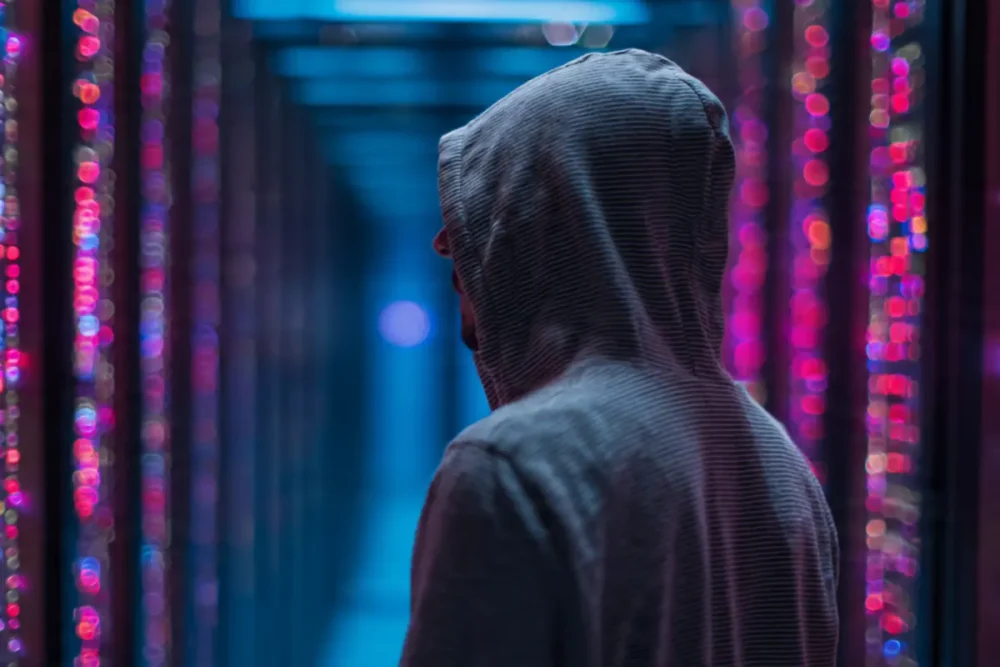
Elena clicks the ‘Connect’ button on her desktop. The shield icon pulses once and glows a steady, reassuring neon green. In her mind, she has just stepped behind a one-way mirror, invisible to the scrapers and the advertisers that haunt the 2026 internet landscape.
She is wrong. In the current era of the ‘Great Data Drought,’ the very tunnel she uses to hide is actually a high-definition recording studio. Every search, every pause on a long-form article, and every interaction with a decentralized app is being harvested.
This isn’t a security breach in the traditional sense. It is the new business model. Your VPN isn’t just leaking your data; it is actively packaging your ‘anonymized’ browsing habits to feed the insatiable hunger of GPT-6 and Claude 5.
The Great Data Depletion of 2025
To understand why your privacy tool betrayed you, we have to look back at the collapse of the open-web scraping model in late 2024. As Reddit, X, and the major news conglomerates successfully walled off their archives, AI labs hit a wall.
Static data was no longer enough. To reach the next level of ‘Reasoning Agents,’ LLMs needed to understand how humans navigate the complexity of the live web. They needed to see the path, not just the destination.10 AI Game Generator Tools to Create Games Instantly
VPN providers sat on the ultimate goldmine. While the rest of the world was blocked by robots.txt and paywalls, VPNs had a front-row seat to the encrypted traffic of 400 million ‘privacy-conscious’ users.
From Encryption to Telemetry
In 2026, the technical architecture of the top-tier VPNs has shifted. They still offer AES-256 encryption against your ISP, but that encryption terminates at the VPN’s own server. This is where the ‘Observation Layer’ resides.
This layer uses lightweight, edge-computing AI to analyze the traffic stream. It doesn’t need your name or your credit card number. It needs your behavioral signature—the way you cross-reference medical symptoms or the specific order in which you research a stock.
This is sold to AI developers as ‘Human Navigation Sequences.’ It is the most valuable training data on the market because it represents the highest tier of human cognitive intent.35+ Secret Midjourney V6 Prompts for Professional Logo Design in 2026
The Illusion of Anonymization
VPN marketing departments have mastered the art of semantic deception. They promise ‘No Logs’ and ‘Zero Tracking.’ In the fine print of 2026, however, these terms have been redefined to allow for the collection of ‘Abstracted Behavioral Telemetry.’
They argue that since they aren’t attaching your name to the data, your privacy remains intact. But the reality of LLM scraping is that ‘anonymity’ is a 20th-century concept that no longer exists in a world of algorithmic pattern matching.
An LLM doesn’t need your IP address to know who you are. It only needs the unique cadence of your browsing habits. Your digital fingerprint is as distinct as your DNA, and the VPN is the entity handing it over for a premium.
The Rise of the ‘Dual-Agent’ Scraper
We are now seeing the emergence of ‘Dual-Agent’ scrapers. These are LLM-integrated nodes that live directly within the VPN’s infrastructure. They don’t just record what you do; they use your connection to ‘scout’ the web in your wake.7 Most Secure Programmable CBDC Wallets to Use in 2026
When you visit a password-protected portal, the scraper uses the session metadata to map the internal structure of that site. You are essentially acting as a human ‘key’ for the AI to unlock and index areas of the web it could never reach on its own.
This is the ultimate betrayal of trust. You pay for a service to act as your bodyguard, only to find out the bodyguard is taking photos of your house and selling the floor plans to a developer next door.
The Regulatory Failure
The Data Sovereignty Act of 2025 was supposed to stop this. It mandated that users ‘own’ their data. However, the VPN industry successfully lobbied for an exemption regarding ‘system optimization’ and ‘security intelligence.’
By labeling the scraping as a ‘security feature’ to detect botnets, they have bypassed the strongest protections of the current decade. The law has proven too slow for the speed of AI integration.Best Crypto Tax Software for High Volume Traders 2026: Unlimited Plans & API Limits
In 2026, the regulatory gap is wide enough to drive a data-center through. While we argue over cookies, the AI labs are eating the entire jar.
Why We Keep Paying
The irony is that we continue to pay for these services. The ‘Privacy Paradox’ has reached its logical conclusion. We are so afraid of the visible trackers—the pop-up ads and the social media ghosts—that we flee into the arms of the invisible ones.
We have been conditioned to believe that a green lock and a paid subscription equal safety. We have forgotten that in a digital economy built on intelligence, anything that touches our data will eventually try to learn from it.
For many, the trade-off is invisible. The internet still works. The VPN still lets them watch regional sports. The cost is a subtle loss of cognitive autonomy as our very thoughts are harvested to build better machines.Will Airplane Mode Prevent Roaming Charges Verizon?
The Search for the ‘Dark Tunnel’
Is there an alternative? A small movement of ‘Network Minimalists’ has begun using local-only hardware and decentralized onion-routing protocols that have no corporate nexus. But for the average user, these tools are too complex.
We are stuck in a cycle where privacy tools are the primary vectors for surveillance. The ‘Dark Tunnel’ we were promised has become a spotlight.
Unless there is a fundamental shift in how we value behavioral data, the VPN will remain the most efficient surveillance tool ever invented.
Final Thoughts
The betrayal isn’t that the technology failed. The betrayal is that it worked exactly as intended for its new masters. Your VPN is a bridge, but you are not the traveler—you are the cargo.
In 2026, ‘Privacy’ is no longer a product you can buy. It is a state of being that the modern web has made functionally impossible. If you are online, you are training the machine, regardless of which flag you fly or which tunnel you hide in.
The neon green icon is still there. It’s glowing. But it’s no longer a shield. It’s a record light.