


If AI could recreate any Hollywood blockbuster with you as the lead, cinema would transform from a passive viewing experience into a personalized digital playground. Using advanced deepfake technology and generative video, these tools analyze your features and seamlessly map them onto iconic actors in seconds.
Have you ever sat in a darkened theater, popcorn in hand, watching Tom Cruise sprint across a rooftop or Scarlett Johansson outmaneuver a room full of villains, and thought, “I could do that”? I know I have. For decades, that was a childhood fantasy reserved for the backyard with a plastic lightsaber. But the wall between “the audience” and “the star” isn’t just crumbling it’s been vaporized.
We’ve officially entered the era of the “Selfie Cinema.” Thanks to the explosive growth of Artificial Intelligence, we aren’t just watching movies anymore; we’re infiltrating them. We’re talking about high-fidelity, high-speed face swapping that makes the $100 million CGI budgets of ten years ago look like finger painting. Today, I’m going to walk you through the heavy hitters of this industry, the tools that let you hijack a blockbuster, and the weird, wild future this technology is carving out for all of us.
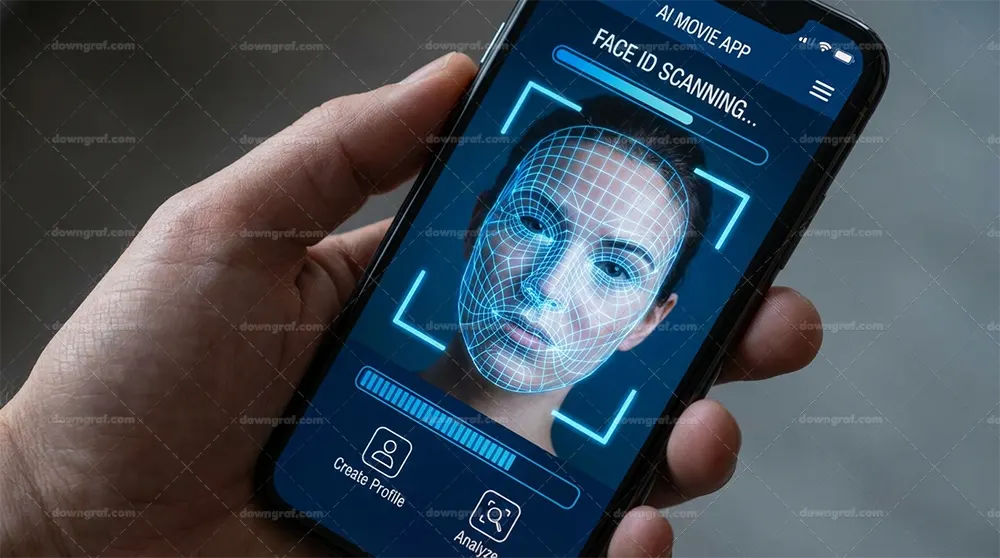
The Rise of AI Personalized Cinema
The shift from “watching” to “being” didn’t happen overnight, but it feels like it did. Just a few years ago, if you wanted to swap a face in a video, you needed a PhD in Computer Science, a $5,000 liquid-cooled PC, and about three weeks of rendering time. Now? You need a smartphone and about fifteen seconds of patience.
Personalized cinema is the ultimate endgame of the “Creator Economy.” We’ve spent years personalizing our social media feeds, our Netflix recommendations, and our Spotify playlists. It was only a matter of time before we started personalizing the actual content itself. When we look at the trajectory of Machine Learning and Neural Networks, the goal has always been to reduce the friction between human imagination and digital reality.Top Customer Relationship Management Challenges & Solutions
How Deepfake Technology is Shifting from Studios to Smartphones
The term “deepfake” is used to carry a heavy, almost forbidden weight. It was the stuff of high-end Hollywood de-aging, think Samuel L. Jackson in Captain Marvel or Harrison Ford in the latest Indiana Jones. These studios used massive server farms and teams of digital artists to manipulate every frame.
However, the democratization of Computer Vision changed the game. Developers realized they could condense these massive Neural Networks into mobile-friendly versions. By training models on millions of human faces, these apps can now recognize the underlying structure of your face the distance between your eyes, the bridge of your nose, the way your jaw moves when you laugh and “re-skin” an existing video file in real-time.
We are moving away from traditional CGI toward Synthetic Media. In the old days, you’d have to build a 3D model of a person and animate it. Now, the AI just “imagines” what you would look like in that lighting, at that angle, and paints you into the scene. It’s less like digital sculpting and more like digital hallucination.
Best AI Apps to Put Yourself in a Movie: Top 5 Tools
If you’re ready to see yourself as the next James Bond or the lead in a rom-com, you need the right kit. Not all apps are created equal; some focus on memes, while others focus on hyper-realism. Here are the five best tools on the market right now.10 Interactive Ideas for a Presentation That Wow Any Audience
1. Reface: The King of One-Tap Movie Swaps
If you’ve ever seen a friend post a video of themselves as Jack Sparrow on Instagram, they were likely using Reface. For my money, Reface is the most accessible “gateway drug” into the world of Generative Video.
- Why it works: It uses a sophisticated Universal Face Swap (UFS) model that doesn’t require you to upload hundreds of photos. One clear selfie is enough.
- The Experience: It’s snappy. You pick a “Refaceable” clip from their massive library (which includes everything from Marvel scenes to trending music videos), hit the button, and boom you’re the star.
- The Verdict: It’s great for social media shares and quick laughs. The quality is surprisingly high for a mobile app, though it can occasionally struggle with extreme side profiles.
2. DeepFaceLab: For Professional-Grade Recreations
Let’s get one thing straight: DeepFaceLab is not for the faint of heart. This isn’t an “app” you download on your iPhone; it’s an open-source software hosted on GitHub. If you want to create a video that actually fools people into thinking you were cast in The Matrix, this is what you use.
- The Power: It’s the industry standard for high-quality deepfakes. It uses intense Machine Learning processes to “train” a model specifically on your face.
- The Catch: You need a powerful GPU (Graphics Processing Unit) and a lot of time. We’re talking hours or days of training to get a perfect result.
- The Verdict: If you’re a hobbyist filmmaker or a tech nerd who wants the absolute pinnacle of realism, this is your holy grail.
3. HeyGen and Synthesia: The Future of AI Avatars
While these are often marketed toward businesses for corporate training, their underlying tech is exactly what we’re talking about. HeyGen and Synthesia are leaders in “AI Video Generation.”
- The Tech: Instead of just swapping a face onto an existing actor, these tools allow you to create a “digital twin.” You can record yourself for a few minutes, and the AI builds a fully articulable avatar that can say anything you type.
- Hollywood Application: Imagine a movie where the script is dynamic. You could type in your own lines, and your digital twin would perform them in a cinematic setting.
- The Verdict: These tools represent the “synthetic” side of Hollywood. They are less about swapping and more about creating entirely new performances from scratch.
4. SwapFace (Desktop)
SwapFace is a fantastic middle ground between the “one-tap” simplicity of Reface and the “I need a degree” complexity of DeepFaceLab. It’s a desktop application that allows for high-quality swaps and even real-time swapping for live streaming.What if the next iPhone features a built-in holographic projector for 3D FaceTime calls and gaming?
- Key Feature: It has a “Stream” mode. Yes, you can literally jump on a Zoom call or a Twitch stream and look like a Hollywood star in real-time.
- Processing: Because it uses your PC’s hardware rather than a cloud server, the privacy is better, and the resolution is often higher than mobile alternatives.
5. FaceMagic
FaceMagic is another heavy hitter in the mobile space. What I love about this one is the “Multi-face swap” feature.
- Group Scenes: Most apps struggle when there’s more than one person in the shot. FaceMagic allows you and a friend to swap into a scene together. Want to be Batman and Robin? This is your best bet.
- The Library: They stay incredibly current with Hollywood trends. If a movie came out last Friday, there’s a good chance a “Magic” template is available by Monday.

Step-by-Step Guide: How to Star in Your Favorite Blockbuster
If you’re ready to take the plunge, don’t just wing it. To get a result that doesn’t look like a distorted nightmare, you need a strategy. Here is the “Human Writer” guide to making yourself look like a star.
- The Perfect Source Image: The AI is only as good as the data you give it. Take a selfie in neutral lighting. Avoid harsh shadows or “beauty filters.” The AI needs to see the actual geometry of your face. Look directly at the camera with a neutral expression.
- Match the Lighting: This is the pro tip everyone misses. If the movie scene you’re swapping into is a dark, gritty noir film, don’t use a selfie you took at high noon on a beach. The AI tries to blend the textures, but it works much better if the light source matches the original clip.
- Choose the Right Scene: Pick a scene where the actor’s face is clearly visible and doesn’t have too many obstructions (like hands passing in front of the face or long hair blowing across the eyes). These “occlusions” are the natural enemy of Face Swapping software.
- Run the Render: If you’re using a mobile app, this takes seconds. If you’re using desktop software, I recommend running a “low-res” pass first to make sure the alignment is right before committing to a 4K render.
- Post-Processing: If you want to go the extra mile, take your finished AI video into Video Editing Software like Adobe Premiere or DaVinci Resolve. Add a bit of grain or a color grade to match the movie’s aesthetic perfectly.
Legal and Ethical Considerations of AI Face Swapping
We can’t talk about this technology without addressing the elephant in the room. This stuff is powerful, and with great power comes. Well, a lot of lawyers.How to Handle Stage Fright Public Speaking: 6 Easy Tips
The concept of Intellectual Property (IP) is currently being pushed to its breaking point. When you swap your face into a clip of The Avengers, you are technically using copyrighted material. For a private joke or a social media post, most studios look the other way: it’s free promotion. But the moment you try to monetize that content, you’re in a legal minefield.
Then there’s the issue of Consent. Deepfake technology has a dark side, often used to create non-consensual content. This is why the industry is moving toward “Ethical AI” frameworks. Most reputable apps now have built-in filters to prevent the creation of harmful or explicit content.
- The “Right of Publicity”: In the USA, many states have laws that protect a person’s likeness. You can’t just put a celebrity’s face on your body to sell a product.
- The Digital Watermark: Many AI tools are now implementing “invisible watermarks” to help platforms identify Synthetic Media. This is crucial for maintaining the boundary between reality and fabrication.
The Future of Personalized Media: Will Every Movie Be About You?
Let’s look five to ten years down the road. Imagine you open Netflix, and instead of just clicking “Play” on the new Stranger Things, you click a button that says “Cast Me.”10 Secret Tips on How to Get Audience Attention in a Speech Quickly
The app already has your 3D facial scan (from your phone’s FaceID). As the show streams, the server replaces the lead actor with a high-fidelity version of you in real-time. This isn’t science fiction; the building blocks are already here.
We are moving toward a world of “Modular Entertainment.”
- Interactive Narratives: Your choices don’t just change the plot; they change the cast.
- Hyper-Localized Marketing: Imagine a movie where the billboards in the background of a chase scene are showing products you actually want to buy.
- The End of the “Star”?: If everyone can be the star, what happens to the A-list celebrity? We might see a shift where actors license their “digital likeness” for a fee, allowing us to interact with them in our own personalized versions of films.
This is a massive shift for Hollywood. The “Star System” was built on the idea of the untouchable icon. But Artificial Intelligence makes the icon touchable. It makes the icon replaceable. While that might sound scary for actors, it’s an incredible opportunity for audience engagement.
Frequently Asked Questions
Is it legal to use AI to put myself in a movie?
For personal use and social sharing, it generally falls under “Fair Use” or is ignored by copyright holders as transformative fan art. However, you cannot use these videos for commercial purposes or to claim you are the original actor without infringing on Intellectual Property and “Right of Publicity” laws.
Do I need a powerful computer to do this?
Not necessarily. Apps like Reface and FaceMagic handle the processing on their own cloud servers, so you only need a standard smartphone. If you want to use professional tools like DeepFaceLab, you will need a PC with a high-end NVIDIA graphics card.
Are these apps safe for my privacy?
It depends on the app. Always read the privacy policy. Some apps store your facial data on their servers to improve their models, while others process it locally and delete it. Stick to well-known, highly-rated apps to minimize risk.
Can I put myself in a live-action movie or just cartoons?
Both! Modern Neural Networks are trained on both human faces and animated characters. While the tech works best on live-action footage due to the realistic lighting and textures, you can certainly swap yourself into a Disney or Pixar film with surprising results.
Conclusion: Your Hollywood Debut Awaits
The “What If” is no longer a question of possibility, but a question of preference. AI has democratized the silver screen, taking the tools of the elite and putting them in the palm of your hand. Whether you want to send a hilarious video to your family or you’re a creator looking to push the boundaries of Synthetic Media, there has never been a better time to experiment.
We are standing on the edge of a cinematic revolution. The line between creator and consumer has blurred into a beautiful, pixelated mess. So, go ahead take that selfie, pick your favorite scene, and let the AI do the heavy lifting. Your Hollywood debut is only a few clicks away.