


In the complex world of modern business, one role stands as the guardian of financial accuracy and legislative adherence: the Payroll Compliance Practitioner (PCP).
A Payroll Compliance Practitioner (PCP) is a certified professional designation awarded by the National Payroll Institute (NPI) in Canada. It signifies that an individual possesses the foundational knowledge and skills required to manage an organization’s annual payroll cycle, ensuring strict compliance with all federal and provincial legislation.
This guide is your roadmap to understanding, achieving, and mastering this essential designation. Whether you are an aspiring payroll professional, an HR specialist looking to upskill, or a business owner aiming to understand who handles your money, this is everything you need to know.

What Exactly is a Payroll Compliance Practitioner?
The PCP designation is the gold standard for entry-to-mid-level payroll professionals in Canada. It is not merely about data entry; it is about compliance. Payroll is one of the most regulated areas of business, interacting with the Canada Revenue Agency (CRA), Service Canada, and various provincial labour boards.What Font Does iPhones Use? San Francisco and SF Pro
The Role at a Glance
A PCP is responsible for more than just cutting cheques. Their core duties include:
- Calculating Net Pay: Accurately computing regular wages, overtime, and bonuses while deducting the correct statutory amounts (CPP/QPP, EI, Income Tax).
- Legislative Compliance: ensuring the organization follows the Employment Standards Act and other labour laws.
- Remittances: Calculating and submitting amounts owed to the government and third parties (like insurance providers or unions).
- Year-End Reporting: preparing T4s, RL-1s, and other summary reports.
- Stakeholder Communication: Explaining complex payroll deductions and tax laws to employees and management.
PCP vs. CPM: What’s the Difference?
The National Payroll Institute offers two main levels of certification. It is crucial not to confuse them.
| Feature | Payroll Compliance Practitioner (PCP) | Certified Payroll Manager (CPM) |
|---|---|---|
| Level | Foundation / Operational | Management / Strategic |
| Focus | Compliance, Calculations, Day-to-Day Cycle | Strategy, Analysis, Department Management |
| Prerequisite | None (Open entry) | Must hold PCP designation first |
| Target Audience | Payroll Administrators, Officers, Clerks | Payroll Managers, Directors, Supervisors |
| Experience Needed | 1 year weighted experience | 2 years weighted management experience |
Is This Recognized Globally?
The PCP is a Canadian-specific designation.
- In the USA: The equivalent is the CPP (Certified Payroll Professional) offered by PayrollOrg (formerly the American Payroll Association).
- In the UK: The CIPP offers equivalent chartered qualifications.
If you plan to work in Canada, the PCP is the credential employers demand. It verifies you understand Canadian tax law, which differs significantly from US tax codes.How Can a DevOps Team Take Advantage of Artificial Intelligence?
Why Become a Payroll Compliance Practitioner?
The demand for skilled payroll professionals is recession-proof. As long as people work, they need to be paid—and the government needs its taxes.
1. Enhanced Earning Potential
According to 2025/2026 salary data, professionals with a PCP designation earn significantly more than their non-certified counterparts.
- Entry-Level (Non-certified): $45,000 – $55,000
- PCP Certified: $55,000 – $75,000+
- Senior PCP Roles: $80,000+
2. Job Security and Demand
Payroll compliance is a legal requirement. Companies cannot afford errors that lead to CRA audits or lawsuits. This creates a steady demand for certified PCPs who can navigate the ever-changing legislative landscape.
3. Career Mobility
The skills learned as a PCP are transferable across every industry. Whether it’s tech, government, retail, or manufacturing, every sector requires payroll compliance.10 Best Vision Pro 3 Spatial Canvas Productivity Tools for Remote Teams

How to Become a PCP: The 3-Step Roadmap
Achieving the designation requires a combination of education, practical experience, and professional membership.
Step 1: Education (The 4 Core Courses)
You must complete three core payroll courses and one transfer credit. These must be completed with a minimum grade of 65%.
- Payroll Compliance Legislation (PCL):
- Focus: The laws affecting payroll (Federal/Provincial), labour standards, and privacy.
- Difficulty: Moderate. Requires memorization of rules.
- Payroll Fundamentals 1 (PF1):
- Focus: The math. Calculating gross pay, net pay, terminations, and Records of Employment (ROE).
- Difficulty: High. This is often considered the “weeder” course due to complex manual calculations.
- Payroll Fundamentals 2 (PF2):
- Focus: Third-party remittances, accounting for payroll, and year-end reporting.
- Difficulty: Moderate to High.
- Introduction to Accounting:
- Focus: Basic accounting principles (journal entries, general ledger).
- Note: This is usually a transfer credit taken at a college or university, not directly through the NPI.
Step 2: Work Experience (WERA)
You cannot be a PCP with book smarts alone. You must fulfill the Work Experience Requirement Application (WERA).
- Requirement: One year of weighted payroll work experience.
- Timeline: Can be obtained 5 years before or 5 years after starting your first course.
- “Weighted” means: If you only do payroll 50% of the time, it will take you 2 years to get 1 year of credit.
Step 3: Membership
You must be a member in good standing with the National Payroll Institute. This involves paying annual dues and adhering to their Code of Professional Conduct.GEO Strategy for Enterprise SaaS: The Ultimate Guide to Generative Engine Optimization
Insider Tips for Passing the PCP Exams
The PCP exams are notoriously rigorous. Here are expert tips to ensure you secure that passing grade.
The “Net Pay” Pitfall
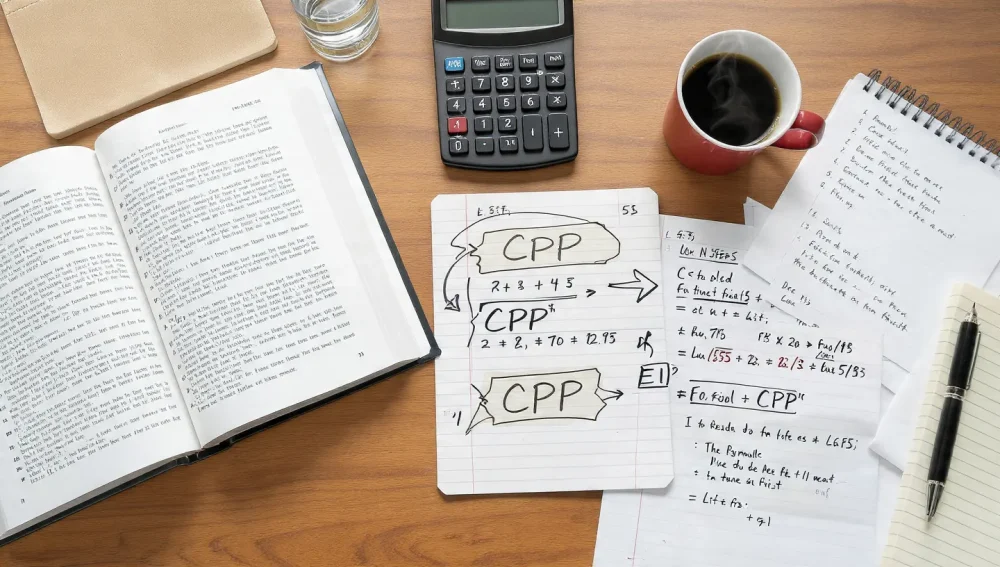
The most common reason for failure in Payroll Fundamentals 1 is the Net Pay Calculation. You will be asked to manually calculate a paycheck from start to finish—gross income, taxable benefits, CPP/EI premiums, and income tax deductions.
- Tip: Practice manual calculations until you can do them in your sleep. Do not rely on Excel during study; you won’t have it in the exam.
Calculator Policy
You are generally required to use a non-programmable, physical calculator.
- Tip: Buy a reliable Casio or Sharp business calculator months before the exam. Get used to the tactile feel of the keys. Speed matters.
The “Open Book” Myth
While some online courses may allow access to materials (check current NPI specific exam rules, as they change), the exams are time-crunched.Why Heat and Alcohol Are Used to Disinfect Medical Equipment
- Tip: If you have to look up every answer, you will fail. You need to know the contribution rates and legislation limits by heart.
Essential Skills for the 2026 PCP
To rank as a top-tier candidate in 2026, the certification is just the starting line. You need to master specific technical and soft skills.
1. Payroll Technology Proficiency
Gone are the days of manual ledgers. You must be proficient in:
- Human Capital Management (HCM) Suites: Workday, Dayforce (Ceridian), ADP Workforce Now.
- Cloud Platforms: Understanding how SaaS payroll works.
- Excel: VLOOKUP, Pivot Tables, and XLOOKUP are mandatory for auditing data.
2. Analytical Thinking
Automation is handling the data entry. Your value lies in auditing. Can you look at a payroll register and spot that someone’s EI deduction stopped too early? That is the analytical skill employers pay for.
3. Soft Skills: The “Translator”
You are the bridge between the CRA and the employee.
- Communication: Can you explain to an angry employee why their tax deduction went up this month without using confusing jargon?
- Confidentiality: You handle the most sensitive data in the company. Integrity is non-negotiable.
Frequently Asked Questions (FAQ)
Is the PCP designation hard to get?
Yes, it is challenging. The passing grade is 65% for both the course mark and the final exam. Many students struggle with Payroll Fundamentals 1 due to the complex manual calculations required. It requires dedicated study time, typically 4-6 hours per week per course.
Can I get the PCP designation online?
Yes. The National Payroll Institute offers all core courses online. You can also take them through various post-secondary colleges in Canada (like Seneca, Humber, BCIT, SAIT) which offer them virtually. Exams are typically proctored online.
How much does the PCP certification cost?
The total cost varies depending on where you take the courses (Institute vs. College). Roughly, you can expect to pay:
- Course Fees: ~$400 – $600 per course (x3 courses)
- Transfer Credit Fee: ~$100
- Membership Fee: ~$200 – $300 annually
- Total Estimated Investment: $2,000 – $2,500 CAD.
Does the PCP expire?
The designation itself does not “expire” as long as you:
- Maintain your membership with the National Payroll Institute.
- Adhere to the Code of Conduct.
- Fulfill Continuing Professional Education (CPE) requirements (usually 14 hours of professional development annually) to ensure you stay up-to-date with legislative changes.
Can I work as a PCP in the USA?
The PCP teaches Canadian legislation. It is not legally recognized for compliance in the US. However, the fundamental principles of payroll (accuracy, auditing, confidentiality) are transferable. If you move to the US, you would likely need to pursue the FPC (Fundamental Payroll Certification) or CPP (Certified Payroll Professional) to learn American tax laws.

Conclusion
Becoming a Payroll Compliance Practitioner is a strategic career move that offers stability, respect, and financial reward. It transforms you from a back-office administrator into a strategic partner who protects the organization’s financial health.
By mastering the legislative requirements, conquering the “math of payroll,” and staying ahead of technological trends, you position yourself as an indispensable asset to any Canadian business.
Ready to start? Visit the National Payroll Institute website today to register for your first course, Payroll Compliance Legislation, and take the first step toward your designation.